Beechat Network Systems have entered an exclusive partnership with GoTAK LLC, a Virginia-based leader in advanced situational awareness and tactical communications. Under this agreement, GoTAK becomes the exclusive U.S. distributor and integration partner for the Kaonic 1S, a next-generation mesh radio redefining resilient and decentralised communications.

Redefining Tactical and Off-Grid Connectivity

Kaonic 1S is the world’s first purpose-built SDR mesh radio based entirely on the Reticulum protocol, a cryptographically secure, open-source framework that enables autonomous, peer-to-peer communication without reliance on central infrastructure. Supporting up to 128 network hops, Kaonic 1S maintains secure, persistent connectivity across vast terrains and challenging environments. It is ideal for operator communications, sensor integrations, or sUAS control over MAVLink.

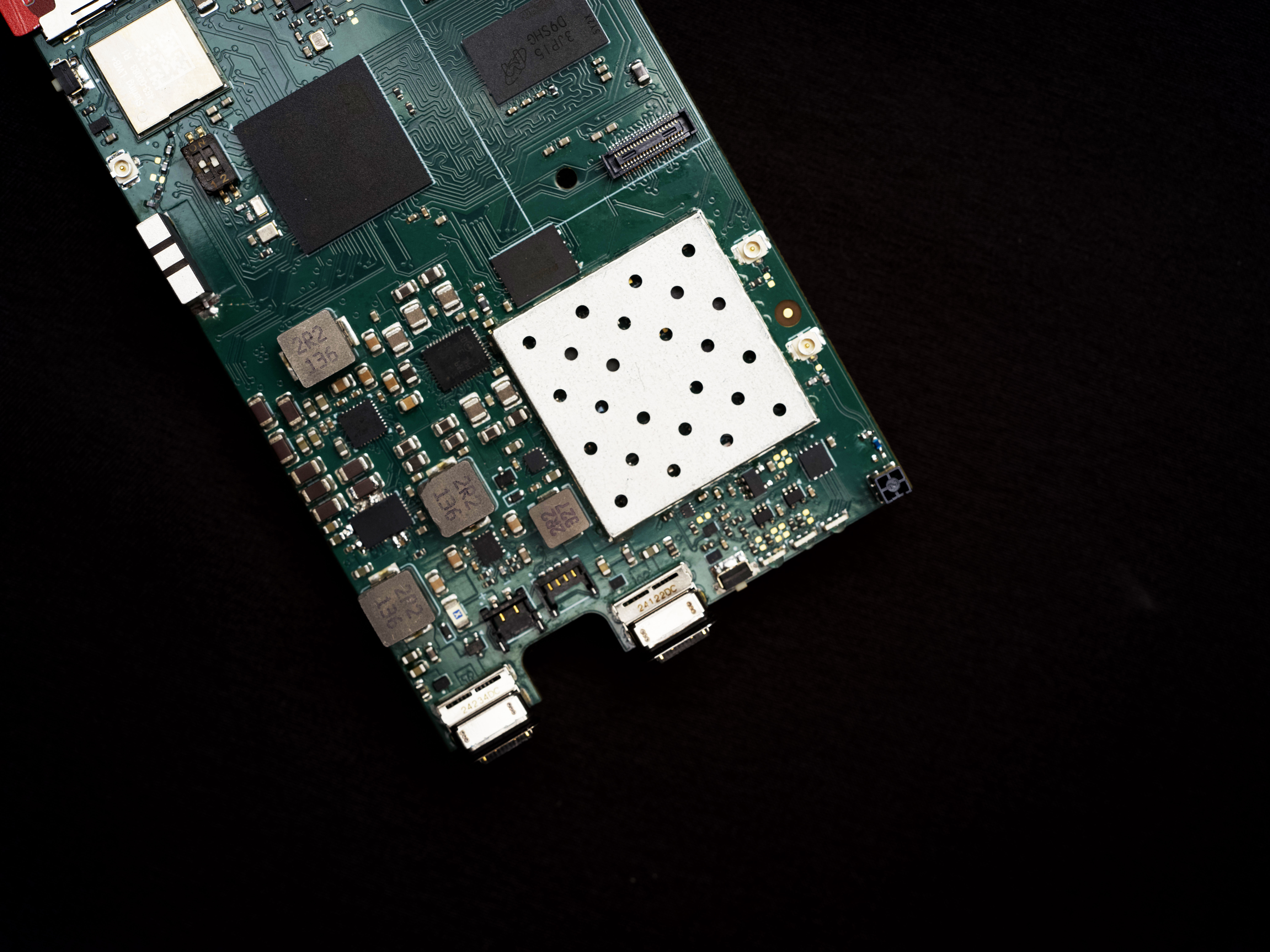
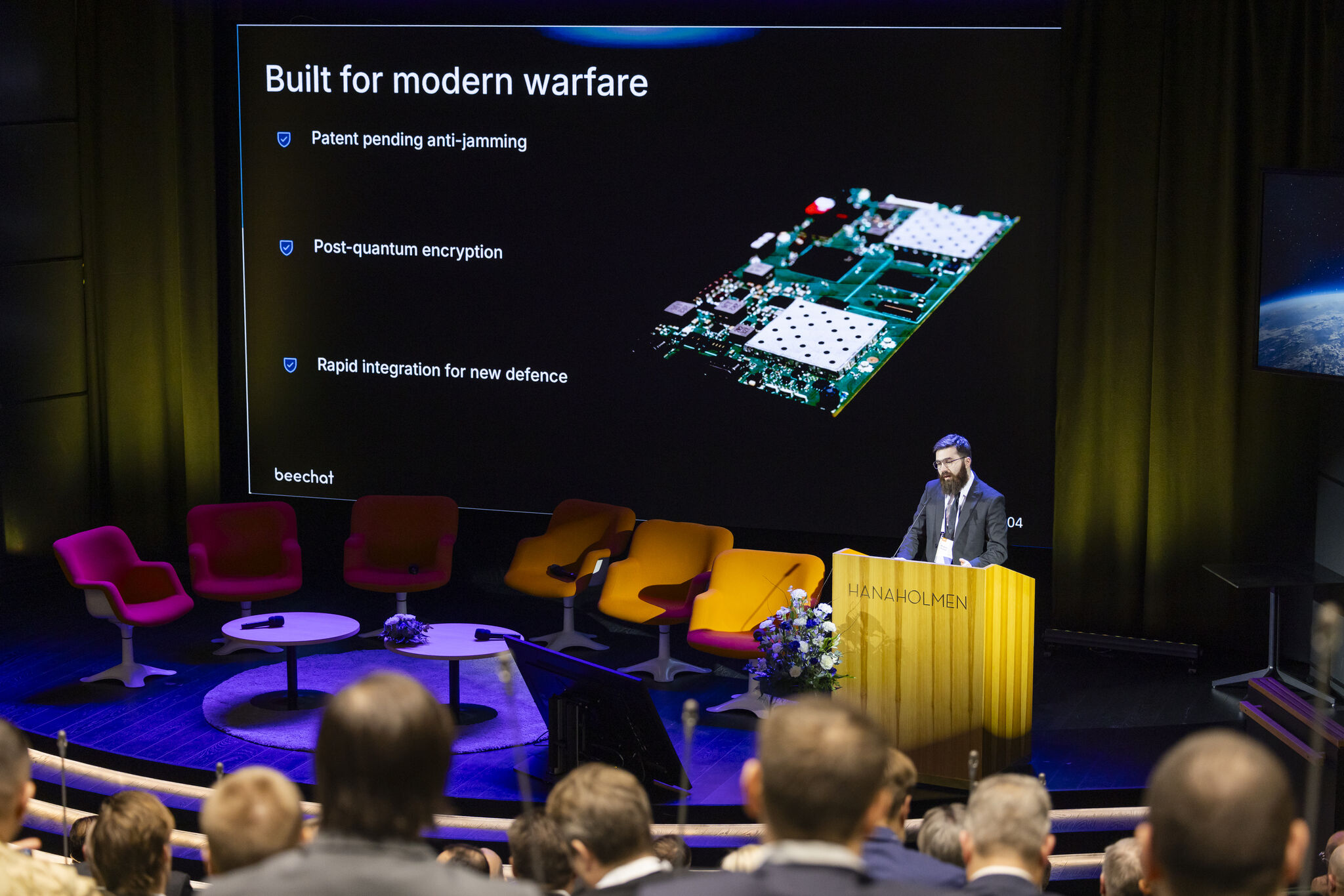
Powered by an STM32MP1 MPU running Yocto Linux, Kaonic 1S combines dual transceivers delivering up to a combined 9600 kbps throughput. The Kaonic 1S features an FPGA module slot which allows modular FPGA add-ons with the Kaonic FPGA 50K based on the AMD Xilinx Spartan-7 platform as the first release, allowing for waveform experimentation. Patent-pending HopSync™ technology provides trustless Frequency Hopping, with no known technology being able to detect the next hop even after packets have been captured and analysed. This combination of openness, modularity and operational security sets a new benchmark in mesh communications.

Expanding U.S. Access to Secure Mesh Technology

Through this partnership, GoTAK will oversee U.S. distribution, integration and support for Kaonic 1S and its modular ecosystem, including the upcoming Vantage AI Module and multiband antenna system. These subsystems extend the platform into AI-assisted edge inference, video encoding and tactical MIMO operations, giving users adaptable, mission-specific network capabilities.

“This partnership marks a major step forward in making secure, open, and interoperable mesh networking technology accessible to U.S. operators. GoTAK’s deep understanding of the TAK ecosystem and extensive field experience make them the ideal partner to deliver and support the Kaonic 1S across defense, public safety, and commercial domains. Together, we are building the foundation for a more connected, resilient, and sovereign tactical communications network,” said Víctor Manuel Vicente Terán, Chief Sales Officer and Co-Founder of Beechat.

Building an Interoperable Tactical Ecosystem

Kaonic 1S integrates with Team Awareness Kit (TAK) environments through the Kaonic ATAK plugin, enabling encrypted messaging, secure mesh data exchange and real-time geolocation. When combined with GoTAK’s TAKOS platform and its interoperability tools spanning ISR, satellite and sensor integration, Kaonic 1S becomes a key node in a rapidly deployable, multi-transport communications architecture.

Kaonic 1S is available exclusively through GoTAK LLC for U.S. procurement. Volume purchasing programmes, OEM integration support and developer kits are open to government, commercial and research clients. For U.S. customers, visit https://getgotak.com/products/kaonic-1s-mesh-radio.


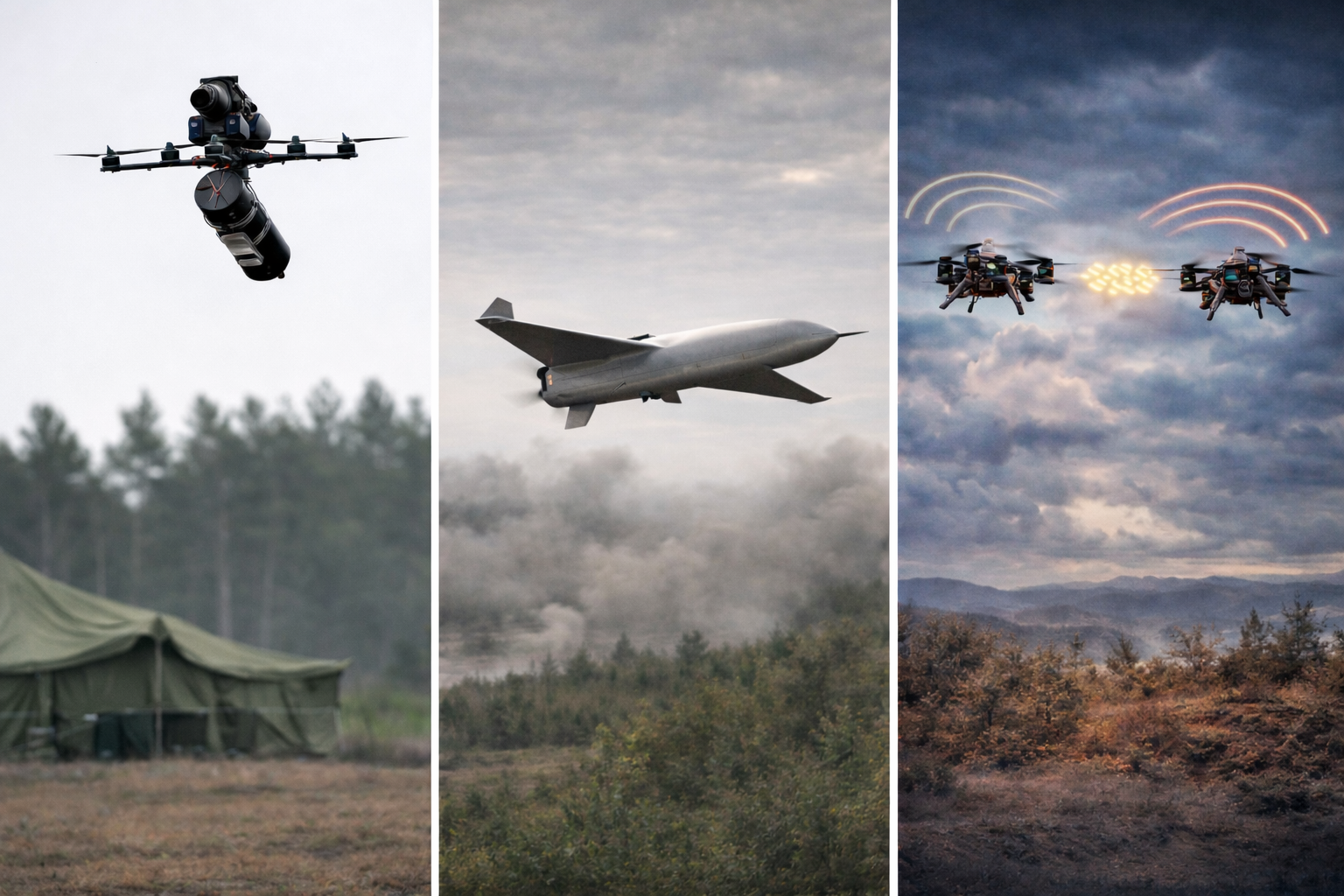
Beechat Network Systems is proud to unveil a pioneering integration of the MAVLink protocol over Reticulum, introducing cryptographically secured, zero-trust mesh transport for drone command and control. This novel architecture enables a Ground Control Station (GCS) to communicate securely with a flight controller over an encrypted, zero trust, multi-hop Reticulum mesh, while preserving the MAVLink protocol.

Key Innovations and Features

  • Authenticated, Encrypted Mesh Transport
    Every packet transmitted over the Reticulum layer is cryptographically authenticated and encrypted, eliminating the possibility of malicious route injection, spoofing, or unauthorised interception.
  • Identity-Bound Communication
    Addresses in the mesh correspond directly to public keys, tying each node’s identity to its cryptographic key. GCS, mesh nodes, and the flight controller each present a unique identity and verify peers continuously.
  • Protocol-Agnostic Overlay
    MAVLink frames are encapsulated over Reticulum, allowing upstream and downstream components to function without awareness of the underlying transport changes.
  • Modular Hardware Integration
    The architecture may be instantiated using Kaonic SDR radio nodes, which bridge between serial interfaces (UART for C2) and the Reticulum mesh. This enables seamless compatibility with off-the-shelf flight controllers.
  • Zero Trust by Design
    Unlike traditional perimeter security models, this architecture follows Zero Trust principles: “never trust, always verify.” There is no implicit trust of any link or node, and lateral movement is minimized.

Upcoming In-Flight Demonstration

Beechat’s engineering team is currently preparing for live flight tests of this MAVLink-over-Reticulum architecture. In the near term, we will demonstrate:

  1. 1. End-to-end MAVLink telemetry, command, and parameter exchange over multiple Reticulum hops.
  2. 2. Failover and route recovery under node loss or dynamic topology changes.
  3. 3. Real-time telemetry under movement, interference, and challenging RF conditions.


QGroundControl App connected to a Flight Controller over radio through Reticulum

QGroundControl App connected to a Flight Controller over radio through Reticulum

“We believe this is a significant step toward truly secure, resilient UAV command links”, said Nicholas Quinn, CEO of Beechat. “By marrying MAVLink with Reticulum’s cryptographic routing, we can bring zero-trust security down to the radio layer and make drone operations much harder to compromise.”

Use Cases & Impact

The integration of MAVLink over Reticulum opens doors to:

  • Secure drone swarm fleets in contested or adversarial environments
  • Resilient command & control in communications-denied or signal-degraded areas
  • Mission continuity despite node failure or jamming
  • Modular, transport-agnostic links all backed by a unified security model

Beechat will publish a technical whitepaper and open-source reference implementation following the demonstration flights. We invite interested parties, such as drone developers, security researchers, and governmental agencies, to engage with us for collaborative evaluation and field trials.

The reference implementation is available on GitHub.
https://github.com/BeechatNetworkSystemsLtd/rns-mavlink-rs

Modern military communications face relentless electronic warfare and dynamic field conditions. Adversaries attempt to jam, intercept, or disrupt tactical networks at every turn. Traditional frequency-hopping spread spectrum (FHSS) radios, long used to evade jamming and eavesdropping, are reaching their limits in these contested environments (U.S. Department of Defense (DoD), “Electromagnetic Spectrum Superiority Strategy,” December 2020). The need for stealthier, more synchronised, and highly scalable mesh networks has never been greater. Enter HopSync, Beechat’s novel stateless frequency hopping system poised to redefine secure tactical communications. HopSync eliminates the synchronisation overhead plaguing conventional FHSS, delivering jam-resistant, low-probability-of-intercept links ideally suited for drone swarms, ad-hoc mesh units, and contested battlefield scenarios.

This article delves into HopSync’s capabilities and benefits, explaining how it outperforms legacy FHSS in synchronisation, stealth, scalability, and jamming resistance.

What Is HopSync and Why Does It Matter?

HopSync is a next-generation frequency hopping protocol that allows a network of radios to “hop” across channels in unison without any explicit coordination messages or central timing source. In FHSS, transmitters and receivers rapidly change their carrier frequency in a pattern known only to them, confounding jammers and interceptors.

Classic FHSS techniques (from Bluetooth’s to military versions like Link16, SINCGARS and HAVE QUICK) require a shared hopping sequence or periodic sync signals to keep nodes aligned. These legacy systems have proven effective at reducing interference and avoiding interception by using secret hop patterns. However, they rely on synchronisation beacons or pre-loaded hop tables, which introduce overhead and points of failure. In fact, it can be estimated that up to 15% of FHSS network traffic is often dedicated to synchronisation beacons in traditional designs.

This “chatter” not only wastes bandwidth but also creates detectable signals that an adversary can target to jam or intercept. HopSync matters because it completely removes the need for those sync beacons, achieving 0% overhead for synchronisation.

Each node can stay in frequency alignment with its peers without any continuous exchange of timing or channel information. By slashing the coordination traffic, HopSync frees up valuable spectrum for actual mission data and dramatically reduces the network’s radio signature. For military decision-makers, this means more efficient use of bandwidth and far less risk of detection in hostile environments.

In short, HopSync pushes FHSS to a new level of stealth and efficiency, solving a critical challenge for modern tactical communication networks.

How HopSync Works: Cryptographic Time-Driven Hopping

HopSync’s innovation lies in using cryptographic, time-derived calculations to decide each frequency hop, without any central clock or handshake. All nodes start by sharing a secret cryptographic key (or “seed”) ahead of time – this can be distributed securely before deployment (even via an offline method like a QR code scan or an asymmetric group key exchange). Once deployed, each node independently computes the next frequency channel from the current time and the shared secret using a one-way cryptographic function.

In technical terms, HopSync implements a Time-based One-Time Password (TOTP)-like algorithm: for example, it may use an HMAC-SHA256 hash of the secret and the current time window to produce a pseudorandom channel number.

Because every node runs the same calculation, they all arrive at the same “hop” frequency for a given time interval – effectively staying in sync without talking to each other about it. Critically, this process is stateless at the network layer. There’s no ongoing session or leader coordinating the hops; synchronisation is implicit. As long as each radio’s clock is roughly aligned (within a few milliseconds) at the start, they will continue to hop together perfectly in phase.

Minor clock differences are handled by using a coarse time window (e.g. rounding the time to the nearest few milliseconds) so that insignificant drift doesn’t cause divergence. In practice, HopSync nodes only need their clocks set within a few milliseconds of each other initially (no GPS or central time server needed) to maintain lock. This approach draws on zero-trust principles: no single node is relied on for sync, and each device trusts only the cryptographic computation. The result is a self-synchronising network where every member “knows” the hopping schedule without any radio exchanges – a fundamentally more secure and resilient design.

Illustration: HopSync’s stateless frequency hopping concept.

Each node receives a shared secret key during provisioning, then autonomously computes the current channel via a cryptographic function of that secret and the current time. No synchronisation beacons or control messages are needed for the nodes to hop in unison. If a node’s clock drifts, it can passively resync by scanning a few predicted future or past frequencies and realigning when it detects a partner’s transmission. Even collisions (two nodes transmitting together) become useful signals: colliding nodes realise they were slightly out-of-sync and automatically adjust their clocks toward each other, achieving “trustless” clock convergence without any explicit negotiation. In essence, HopSync leverages cryptography and clever algorithms so that the network stays synchronised silently, under the hood – an enormous advantage for covert and resilient operations.

Outperforming Traditional FHSS in Sync and Scalability

By eliminating continual sync exchanges, HopSync outperforms traditional FHSS systems in maintaining synchronisation over long periods and across many nodes. In conventional hopping networks, synchronisation can drift over time, requiring periodic corrective signals (which can be lost or jammed). HopSync’s design avoids this pitfall. Remarkably in our simulations, HopSync has demonstrated 24-hour synchronisation stability without any external recalibration, even while hopping hundreds of times per second.

Tests showed that nodes remained aligned for a full day with no coordination messages, a feat simply not feasible with legacy systems. Such stability stems from the robust cryptographic timing and the built-in drift correction strategies (passive scanning and collision-based resync) that keep the network tight without need for manual intervention. Scalability is another area where HopSync shines. In large mesh or ad-hoc networks, traditional FHSS struggles because more nodes usually mean more sync traffic and greater chance of timing mismatch. Networks with dozens of hopping radios often have to slow down hop rates or include complex hierarchy to stay in sync. HopSync, by contrast, scales effortlessly – whether you have 5 nodes or 500, the synchronisation overhead remains zero. Every node independently computes the same channel sequence, so adding nodes does not flood the network with additional coordination messages. There is no “master node” that could become a bandwidth bottleneck or single point of failure. This decentralised approach means a HopSync-enabled mesh can grow in size or rapidly reconfigure (nodes joining or leaving) with minimal impact on performance. Moreover, different “groups” can use different seeds to have distinct hop patterns. Military units can deploy large, fluid networks – from infantry radios scattered across a battlefield to a swarm of hundreds of drones – and expect them all to stay in lockstep without babysitting from a central controller. In short, HopSync combines high-speed hopping with long-term sync stability and unlimited scalability, a combination traditional FHSS simply could not achieve due to its reliance on chatter and coordination.

To put performance in perspective, here are some key HopSync benchmarks and capabilities:

  • Defence-level Hop Rates: Supports hopping rates of 500 hops per second or more, tested up to 1,000 hops/sec in sustained operation.
  • No Re-Sync Needed: Nodes remain synchronised for 24+ hours without any synchronisation packets or central timing input even over long missions, HopSync networks don’t require stopping to realign clocks.
  • Bandwidth Savings: Recovers the ~15% of bandwidth that old FHSS wasted on beaconing. HopSync has 0% sync overhead, meaning all available airtime goes to actual communications. This improves throughput and network efficiency.
  • High Node Count Ready: Capable of coordinating dozens or hundreds of nodes in a mesh with no increase in overhead. The cryptographic hopping algorithm inherently handles large node counts without collisions or traffic congestion.
  • Throughput Under Jamming: In jamming simulations, HopSync delivered up to 40% higher data throughput compared to traditional FHSS systems. By not losing time on sync retries and by leveraging multi-channel hopping (explained next), HopSync keeps data flowing even when the enemy blankets the spectrum with noise.


These metrics underscore how HopSync pushes the envelope of what’s possible in FHSS-based networking. For a military decision-maker, this translates to faster, more reliable communications and the ability to field larger, more complex networks with confidence in their resiliency.

Stealth and Jamming Resistance: HopSync’s “Zero Chatter” Advantage

Communications stealth and anti-jamming are core necessities in contested environments. HopSync was explicitly designed with LPI/LPD (Low Probability of Intercept/Detection) in mind, alongside robust jamming resistance. By eliminating synchronisation broadcasts and any fixed beacons, HopSync drastically reduces a network’s RF footprint. There are no periodic pulses or predictable patterns for an enemy electronic warfare unit to latch onto. In legacy systems, a savvy adversary could watch for the regular sync beacons or control channel transmissions to detect active networks or even disrupt them at those critical moments. HopSync offers no such opportunities – the network is essentially radio-silent about its synchronisation, blending into the background noise. The hopping sequence is fully opaque to outsiders because it’s generated from a secret cryptographic seed.

An eavesdropper or jammer without the secret has no practical way to predict the next frequency hop. This confers a huge stealth advantage: intercepting or consistently jamming HopSync links is exceedingly difficult.

The absence of coordination signals means HopSync communications exhibit a low probability of intercept or detection by design.

In the age of sophisticated RF sensors, that could mean the difference between mission success and exposure. When it comes to active jamming attacks, HopSync brings several powerful techniques to bear. First, its high hop rate (hundreds of hops per second) means that even if a jammer manages to hit one frequency, the network will vacate to the next frequency in a fraction of a second – minimizing the impact window of any single jam.

Second, HopSync can leverage frequency diversity. The system has the option to compute multiple parallel frequency channels for each time slot (using multiple hash outputs) and send duplicate packets over these channels simultaneously. Even if a jammer guesses or hits one channel, the other transmissions still go through. This technique can convert a heavy jamming scenario (e.g. 80% of spectrum jammed) from near-total communication blackout into a high single-packet success probability, mathematically approaching 1 – (Jamming_Fraction)^k (where k is number of parallel channels used). In tests, this multi-channel hopping boosted throughput significantly under aggressive jamming, contributing to that ~40% improvement over conventional FHSS noted earlier. Another innovative anti-jam feature is in-band channel quality sensing. HopSync nodes can periodically scan available frequencies and measure the interference (RSSI) on each, effectively blacklisting the worst channels from the hopping sequence on the fly. This happens locally and silently, without any overt communication – each node independently avoids the noisiest channels. By preemptively sidestepping, say, the top 5% most jammed frequencies, HopSync improves the chances of successful hops without needing any negotiation or centralised control. It’s a bit like water flowing around rocks: the network automatically routes its frequency hops around interference hotspots. Traditional FHSS systems rarely have such agility; they would require either manual reconfiguration or they’d stubbornly continue hopping through jammed channels, wasting precious time. HopSync’s intelligent channel selection ensures maximum uptime and resilience in an electronic attack scenario. In summary, HopSync provides stealth by omitting all telltale sync transmissions and using unpredictable cryptographic hop patterns, and it provides jamming resistance through fast hopping, parallel multi-frequency use, and adaptive channel avoidance. These features collectively make HopSync-equipped radios exceptionally hard to detect or shut down, giving friendly forces a decisive edge in secure communications. These techniques combined with wideband transceivers provides a full anti-jamming solution.

Dynamic Mesh Networking in Action: Drone Swarms and Ad-Hoc Units

One of HopSync’s greatest strengths is how naturally it fits dynamic mesh and ad-hoc networks, which are increasingly common in modern military operations. Consider a swarm of drones operating in contested airspace: they need to share data and coordinate maneuvers without a fixed base station, often in the presence of jamming. Traditional FHSS would struggle here – the swarm would have to frequently exchange sync messages or rely on a leader drone to maintain the hop schedule. If that leader is lost or jammed, the network could fragment. HopSync, on the other hand, allows every drone to literally be on the same wavelength without any leader. As long as each drone was pre-loaded with the network’s secret key and approximate start time, they will all hop in unison through hundreds of frequencies per second, staying connected as a fluid self-healing mesh. If one drone’s clock drifts due to environmental factors (e.g: TCXO ±5 ppm) or if a new drone joins late, HopSync’s passive resynchronisation ensures it can quickly get in lockstep by observing its peers’ signals. The result is a cohesive drone swarm communication link that’s extremely hard to disrupt. Even if an enemy jams some frequencies or one drone is taken out, the others continue seamlessly. This reliable connectivity empowers swarms to be used in more aggressive or complex missions, from autonomous reconnaissance to electronic attack, confident that their control network won’t easily be knocked out. The same applies to ground units and ad-hoc squads. In a fast-moving ground operation, squads often form impromptu communication networks (MANETs – mobile ad-hoc networks) with no guarantee of fixed infrastructure. HopSync-enabled radios can be distributed among soldiers, vehicles, and command nodes to form an instant mesh that requires no base station or GPS timing to function. For example, special forces teams operating deep in contested territory could all tune their radios to HopSync mode, knowing that even if they disperse or new members join later, their comms will auto-synchronise and remain encrypted and jam-resistant. There’s no need for manual frequency coordination or worrying about losing contact due to missed sync – the network self-coordinates through the HopSync algorithm. This is a huge advantage in high-mobility, high-stress scenarios like ambush responses or disaster relief, where users cannot afford to manage the network – it just needs to work. HopSync essentially offers plug-and-play frequency hopping networking for tactical units: turn it on, and the devices find each other and stay in sync under the most trying conditions. Beyond drones and soldiers, HopSync can enable interoperable links across platforms. Imagine unmanned ground robots, surveillance sensors, and manned vehicles all forming a joint mesh in a battlefield IoT (Internet of Battlefield Things). With conventional FHSS, coordinating across different platforms would require careful planning of hop sets and sync times. HopSync simplifies this – as long as they share the secret and time reference, disparate assets can seamlessly join the same hopping pattern. The scalability and zero overhead nature means even a complex network of mixed assets remains efficient. From a command perspective, this kind of resilient ad-hoc network means better situational awareness and control, since every asset stays reliably connected without constant tweaking of comms settings. In summary, HopSync is tailor-made for the dynamic, infrastructure-less environments that characterise drone swarms, contested battlefields, and rapid deployments.

Comparing HopSync to Link 16: A Future-Focused Perspective

Link 16 is one of the most advanced and battle-proven military communication systems in use today. Developed by NATO and widely deployed across air, sea, and ground forces, Link 16 provides high-throughput, jam-resistant, and secure tactical data links for mission-critical information sharing. It excels at situational awareness, command and control, and blue-force tracking over large operational theatres. With features like time division multiple access (TDMA) and frequency hopping, Link 16 ensures multiple participants can transmit and receive without collision, assuming all are time-synchronised. However, Link 16 also depends heavily on GPS-based synchronisation and central planning, which introduces infrastructure requirements and potential vulnerabilities.

This is where HopSync diverges fundamentally. While Link 16 assumes a structured, pre-planned network of high-tier assets with access to GPS and robust encryption hardware, HopSync is designed for the unstructured, dynamic, and decentralised battlefield. It allows any number of nodes, whether ground radios, unmanned drones, or ad-hoc infantry units, to form an instant, encrypted, self-synchronising frequency-hopping mesh without reliance on GPS, a master node, or central coordination. This makes HopSync particularly well-suited for drone swarms, special operations, and contested environments where traditional infrastructure is unavailable or denied.

In terms of anti-jamming, both systems use frequency agility, and rates exceeding 500–1,000 hops per second, but HopSync uses no beaconing or control traffic, giving it a lower probability of detection and intercept. Link 16, in contrast, uses fixed hop patterns tied to its TDMA slots and relies on precise time sync to avoid collisions. If GPS is jammed or spoofed — an increasing concern in modern electronic warfare — Link 16 nodes may struggle to maintain network timing. HopSync sidesteps this by calculating frequencies purely from a shared cryptographic secret and a local clock, making it resilient even when isolated or GPS-denied.

Moreover, HopSync’s zero overhead design (no sync messages, no handshakes) gives it a bandwidth efficiency advantage, especially in low-SWaP environments where every milliwatt and millisecond counts. Link 16 is typically deployed on major platforms with significant computing and power resources (fighters, ships, command vehicles) while HopSync can operate on ultra-lightweight, low-power devices, including embedded radios on small UxVs or dismounted soldiers.

To be clear, Link 16 remains indispensable for joint-force, high-tier coordination across NATO assets and complex air missions. It provides broader capabilities including encryption, terminal authentication, and large-scale situational data sharing. However, for future warfare domains where agile, decentralised, and infrastructure-free communication is critical, such as unmanned systems, peer-to-peer mesh links, and heavily contested RF environments, HopSync introduces a next-generation alternative. It is not a replacement for Link 16 in its core role, but a complementary leap in capability that extends tactical comms into places where Link 16 was never meant to go.

Comparing HopSync to Other FHSS Solutions

It’s important to acknowledge that HopSync builds on a rich legacy of FHSS technology, and there are other solutions in the field. Traditional FHSS systems – such as those used in many current military radios and even commercial protocols like Bluetooth – excel in well-defined environments. They often have simpler implementations and, in benign conditions, provide stable links by following preset hopping schedules or master-slave synchronisation. For example, legacy military radios using FHSS with centralised timing (like older generation SINCGARS or HAVE QUICK units) have proven reliable when a precise time source (e.g. GPS or timing beacon) is available.

These systems were designed in an era of more structured networks, and they perform admirably in scenarios where a central coordinator can periodically align everyone’s frequency hop tables. Some modern mesh radios also use FHSS with adaptive networking, and they may shine in certain metrics like raw data rate or integration with legacy infrastructure. In short, conventional FHSS is a mature technology and remains effective for many use cases. It has kept militaries connected by hopping frequencies for decades. However, the weaknesses of those legacy approaches become apparent in the most demanding scenarios – precisely where HopSync excels. Traditional FHSS’s dependence on coordination signals or pre-defined hop sequences is a single point of failure in contested environments. If the enemy jams the sync channel or if a unit loses contact during a critical timing update, the whole network can desynchronise and fall apart. Many competitor systems also struggle with scaling; they might handle a platoon’s radios but would bog down in a company-sized deployment without adding hierarchy or reducing performance. By contrast, HopSync’s stateless, decentralised design has no single point to target. There’s no beacon for the enemy to jam, and no master node whose loss would break the network.

Where other systems might excel in well-connected scenarios, HopSync stands out in hostile, fluid environments. It maintains higher throughput under jamming (as evidenced by that ~40% throughput multi-k boost in jammed tests) and keeps networks locked together through extreme dynamics that would overwhelm conventional FHSS.

Even the best traditional FHSS competitor cannot easily replicate HopSync’s combination of ultra-fast hopping, long autonomous sync, and cryptographic stealth, because those require fundamentally different design principles. In respectful comparison, one might say others are excellent at what they were built for – stable hops in planned networks – but HopSync is built for the unexpected. It leverages modern cryptography and algorithms to push frequency hopping into domains previously thought impractical, such as large-scale ad-hoc meshes and zero-trust environments. Certainly, legacy systems will continue to serve alongside HopSync for some time (they benefit from established supply chains and familiarity), and they might offer slightly lower power consumption or simplicity in some roles. Yet, when the mission demands maximum resilience and stealth, HopSync clearly offers a superior solution. It effectively future-proofs frequency hopping against the evolving threats of next-generation electronic warfare. Military communications planners should view HopSync not as replacing all FHSS overnight, but as a leap-ahead capability that addresses the gaps left by prior generations – a technology whose time has come as warfare enters the era of drone swarms and pervasive jamming.

Beyond the Battlefield: Surprising Applications of HopSync

While HopSync was conceived for tactical military use, its unique properties open the door to some out-of-the-box applications that underscore its versatility. One such application is in covert operations and intelligence gathering. Because HopSync allows radios to synchronise without ever exchanging a word over the air, two agents or units could pre-share a secret key and later establish communications on the fly in the field with near-zero detectable emissions. For instance, special operations teams operating undercover in an urban environment might each carry a HopSync-enabled covert radio. They could remain radio-silent until needed, then start communicating on a hopping schedule that no one else can anticipate – all without a pre-arranged handshake. This provides an ultra-secure channel for coordination or exfiltration of intelligence under the nose of an adversary. It’s a level of spontaneity and covertness that traditional radio systems, which usually require an initial sync or link setup exchange, cannot match. Another intriguing use case is in disaster relief and off-grid communications for civilians or peacekeepers. Natural disasters often knock out infrastructure, forcing responders to set up ad-hoc networks in chaotic radio environments. HopSync’s ability to create an instant, self-tuning mesh can be a literal lifesaver here. Emergency response teams could distribute inexpensive HopSync-capable handhelds to volunteers and first responders. These devices would automatically coalesce into a robust mesh network that resists interference (which can come from damaged power lines, rogue transmitters, or even deliberate attempts to disrupt relief efforts). The mesh would require no central coordination which is ideal when there’s no time or equipment to set up a command node. Additionally, the high scalability means hundreds of devices from different organisations (fire, medical, police, military, NGOs) could all connect seamlessly, facilitating coordinated relief operations. HopSync’s stealthy, jam-resistant nature isn’t just useful against enemy action; it also means the network can tolerate high noise levels and won’t interfere with other critical systems during a disaster response. It essentially creates a tempest-hardened communication cloud over a disaster zone where normal comms are down. We can even imagine HopSync being applied in the space and aerospace domain. Picture a constellation of small satellites or high-altitude drones that need to be in sync with each other for situational awareness or surveillance, but without relying on centralised ground control. In the vastness of space, syncing up frequencies is a non-trivial challenge. You can’t always count on continuous contact or GPS timing for every satellite. Using HopSync, each satellite could use an onboard clock and shared key to maintain a secure comms link with its peers, even when they’re out of contact with earth. They would automatically align their frequency hopping as they orbit, with no inter-satellite coordinator needed. If one satellite drifts slightly in time or a new satellite joins the constellation, the same passive sync recovery applies. This concept could enhance the resilience of space-based networks which might be targeted by jamming or spoofing from adversaries on the ground. Furthermore, because HopSync is protocol-agnostic (it just picks frequencies; what you send can be any digital data), it might enable cross-service interoperability, as linking an Air Force drone to an Army ground sensor network seamlessly, or connecting allied forces’ communication systems without revealing network coordination signals. These scenarios highlight that HopSync’s core idea – stateless, self-synchronising frequency agility – has broad implications wherever secure, reliable wireless links are needed under unpredictable conditions.

Conclusion: HopSync – The Future of Military-Grade Communications

HopSync represents a paradigm shift in how we approach secure wireless networking for defence and beyond. By marrying cryptographic techniques with agile radio frequency hopping, it achieves a rare trifecta: synchronised, stealthy, and scalable communications with built-in jamming resistance. In this in-depth look, we saw how HopSync outclasses traditional FHSS by removing sync beacons, thereby boosting usable bandwidth and virtually eliminating the typical weak links that adversaries exploit.

We explored how its stateless design allows massive, dynamic mesh networks, from drone swarms to special forces teams, to maintain unity and resilience even under 24 hours of drift, heavy jamming, or complete lack of infrastructure.

HopSync doesn’t throw away the lessons of earlier FHSS systems; rather, it builds on their strengths (like the proven concept of shared secret hopping) and overcomes their limitations with a fresh, innovative architecture born of modern cryptography and decentralised algorithms.

For military decision-makers, the implications are profound. Embracing HopSync means equipping forces with communications that just work in the most extreme scenarios. Networks that set up faster, evade detection, and fight through jamming better than ever before. It means a tactical edge in any operation that hinges on reliable information exchange, whether it’s controlling autonomous drone fleets or maintaining command-and-control in contested environments. And while HopSync is new, it is aligned with the trajectory of military communications: toward mesh-centric, electronic warfare-hardened, and software-defined solutions that can adapt on the fly. In an era where spectrum dominance can decide conflicts, HopSync offers a leap ahead – a technology that not only counters present threats but anticipates future ones. By outperforming legacy FHSS in synchronisation, stealth, scalability, and jamming resistance, HopSync earns its place as a future cornerstone of military-grade communications. The battlefield of tomorrow will be unpredictable and unforgiving, but with innovations like HopSync, our networks can be just as adaptive and unyielding. The frequency-hopping revolution has begun, and it is stateless, cryptographically empowered, and ready for the fight.

Modern battlefields are defined by contested and denied communications environments. Near-peer adversaries employ aggressive electronic warfare – jamming radio frequencies, intercepting signals, and even cyberattacks – all to disrupt the flow of information. In such scenarios, conventional networking based on the Internet Protocol (IP) and centralized infrastructure can falter. Units can find themselves “off the grid” with satellites jammed or destroyed, cellular networks down, and traditional radios compromised. For example, during the Ukraine conflict, frontline troops faced Russian electronic jamming so intense that new jam-resistant radios had to be developed. 

Defence professionals and tactical network engineers are now re-imagining how to maintain secure, reliable connectivity when the usual rules of networking no longer apply. The future of military communications lies in moving beyond the legacy internet model – embracing mesh-based, ad-hoc networks, new transport protocols not reliant on DNS or centralized address assignment, and hardened cryptographic schemes that even quantum computers can’t crack. This article explores how post-IP networking and cryptographic resilience are emerging as twin pillars of next-generation tactical communications. We will delve into mesh networking and MANETs (Mobile Ad-hoc Networks) for infrastructure-free connectivity, hybrid transport layers to defeat jamming, and advances in encryption (from agile ciphers to quantum-resistant algorithms) that safeguard comms at the tactical edge. These developments, while rarely discussed outside specialist circles, carry massive implications for future conflicts – offering militaries a path to unbreakable communications even in denied environments.

Post-IP Networking: A New Battlefield Paradigm

When communications are heavily contested, networks must operate autonomously, without the crutch of traditional internet infrastructure. Post-IP networking refers to architectures that do not depend on the Internet Protocol suite (IP addresses, TCP/UDP, DNS, etc.) in the conventional manner. Instead, they leverage alternative protocols and addressing schemes better suited to mission-critical resilience. The rationale is simple: IP networks were designed for civil use with assumed stable links and centralized resources – assumptions that break down under jamming, infrastructure loss, or deliberate cyber attack. In a jamming-heavy conflict, sticking purely to IP-based comms can be a liability. Adversaries know the protocols and frequencies to target. By moving to post-IP approaches, militaries can become more unpredictable and robust in the electromagnetic spectrum.

One example of an emerging post-IP framework is Reticulum, an open-source, cryptography-centric networking stack built specifically for resilient comms in austere conditions. Reticulum does not rely on traditional IP addressing or centralised DNS at all – in fact, it doesn’t even include source addresses in packets. There is no central authority managing the address space; nodes self-assign their addresses as needed and new addresses become reachable across the network within seconds. This means a Reticulum-based network can form on the fly, without any pre-existing infrastructure or coordination – ideal for battlefield units that need to set up communications in an infrastructure-denied scenario. Addresses are self-sovereign and portable, so a device can physically move and still keep its network identity. All routing is done through cryptographic identifiers, not IP numbers, eliminating the need for DNS lookups or IP registry. In essence, Reticulum enables completely decentralised, autonomous networks that can scale from local platoon level up to theater-wide, without ever touching the Internet. Importantly, it was designed to cope with extremely low bandwidth and high latency, ensuring that even feeble signals (like low-bitrate long-range radio links) can carry at least some data. The protocol is agnostic to the underlying transport: it can run over radio links like LoRa or AX.25, UHF/VHF channels, Wi-Fi, or even be tunneled over IP if needed. This flexibility means a post-IP network can opportunistically use any available medium – a vital trait when certain bands are jammed or specific links go down.

From a security perspective, post-IP networks often bake in encryption and zero-trust assumptions at the core. In Reticulum’s case, all traffic is encrypted end-to-end by default, with no option for plaintext communication. Every link and packet is secured with strong cryptography, and ephemeral keys provide perfect forward secrecy – so even if one transmission is somehow compromised, it won’t compromise past or future messages. This contrasts with legacy military radio systems where encryption might be an add-on (and sometimes turned off for compatibility or simplicity). By removing the legacy baggage of IP, these new protocols can be designed from the ground up for resilience and security. No dependency on DNS servers, no fixed gateways, no single points of failure – post-IP networks are inherently more difficult to shut down. An enemy can’t simply take out a high-value node (like a DNS node or router) to collapse the whole network, because there is no central nexus – only a web of peer-to-peer links. This decentralised ethos is increasingly seen as a necessity for the disconnected, disrupted, intermittent, and limited (DDIL) environments of modern warfare.

Mesh Networks and MANETs at the Tactical Edge

One of the foundational technologies enabling post-IP communication in denied environments is the use of mesh networks, specifically Mobile Ad-hoc Networks (MANETs), at the tactical edge. In a mesh network, each node (whether a soldier’s radio, a vehicle, a drone, or a sensor) can directly communicate with others and also serve as a relay for third-party traffic. This creates a web of multiple routes rather than the hub-and-spoke model of traditional networks. Decentralised wireless mesh networking is ideal for tactical communications because if any node or link is destroyed, the data can automatically reroute via alternate nodes. The network essentially self-heals – providing continuity of comms under fire. Unlike a fixed infrastructure, there is no single failure that breaks the entire network; even if several nodes go offline, the remaining ones find new paths to maintain connectivity. This resilience is priceless in combat, where equipment will be lost and pathways constantly changing.

MANETs are a specific category of mesh network where every node is mobile and the topology may constantly shift. Each node in a MANET acts as a router, forwarding packets for others based on dynamic routing algorithms. Communication from source to destination often requires multiple “hops” through intermediate nodes, especially when distances are long or line-of-sight is blocked. Crucially, MANETs self-organize and self-configure – nodes can join or leave at any time, and the network adapts without human intervention. This makes MANETs extremely well-suited for military operations where units are moving fast, deploying in unfamiliar terrain, and cannot afford to manually reconfigure networks during maneuvers. Military mesh radio systems today are deployed for everything from dismounted infantry sections to inter-vehicle links and swarms of unmanned systems. They can operate as standalone local networks or integrate with higher-level communications (for example, a platoon’s mesh may uplink to a battalion via satellite or high-bandwidth backhaul when available).

Fault tolerance and anti-jam features in modern tactical mesh radios further enhance resilience. Advanced mesh waveforms can dynamically switch frequencies or hop across channels when they detect jamming or interference. This means if an adversary jams one frequency band, the network nodes can automatically coordinate to move to a clearer channel, maintaining the link. Such frequency agility (often combined with low probability of intercept techniques) makes communications much harder to shut down. For instance, the new generation of squad radios mentioned earlier use fast frequency-hopping spread spectrum and lower-power signals to evade jammers and detection. In practice, a well-designed MANET might have nodes constantly scanning and negotiating the best frequencies to use, on the fly, based on the current interference environment. This is a step beyond traditional fixed-frequency radios and even beyond older frequency-hopping radios that followed a predetermined pattern – modern mesh protocols can use cognitive techniques to adapt in real time.

Scalability is another strength of mesh networks. With careful protocol design, they can cover very large areas by daisy-chaining many hops. Each node effectively extends the range of the network by one more hop. Some cutting-edge systems boast support for exceptionally deep networks – for example, Beechat’s Kaonic encrypted mesh radio platform can handle up to 128 hops, meaning a message could theoretically pass through 128 intermediate devices and still be delivered intact. This kind of reach can blanket a battlespace without any external infrastructure, albeit at the cost of some latency. The fact that every radio becomes a repeater is game-changing: even small units behind enemy lines or in remote terrain can get a message out as long as a chain of friendly or allied nodes exists between them and a headquarters node. Mesh networks may also integrate a mix of static and mobile nodes – e.g., semi-fixed relay nodes placed on hills or aerostats to boost range, combined with highly mobile soldier and vehicle nodes moving through valleys. Together, these form a robust web of connectivity. Notably, mesh networking is not limited to ground forces; it can extend to aerial layer networks (drones, helicopters, tethered balloons) creating an overlaid mesh that links terrestrial units with higher echelons. By complementing or substituting for SATCOM and other infrastructure, tactical mesh networks ensure that even when an enemy tries to sever communications, the network finds another way.

Hybrid Transport Layers to Defeat Jamming

Even the most sophisticated mesh network can face disruption if an adversary is adept and powerful enough – for example, a near-peer enemy might blanket multiple frequencies with jammers or employ cyber techniques to confuse one channel. To counter this, the future of tactical communications is trending toward hybrid transport layers that utilize multiple communication pathways simultaneously. Rather than relying on any single radio link or frequency band, units will leverage a diversified mix – such as UHF/VHF radio, HF radio, line-of-sight microwave, and satellite – all integrated into one cohesive network. If one path is degraded, others are instantly available to carry the traffic. This concept is sometimes called a multi-bearer network or an integrated transport network, and it represents a shift from the traditional approach of having primary and backup links used one at a time.

In the past, military communications planning often followed the PACE model (Primary, Alternate, Contingency, Emergency), which meant you’d designate a main comms method, and only switch to backups if the primary failed. However, against advanced jamming and EW threats, this sequential failover method is too slow and brittle. As one U.S. Army analysis noted, in modern conflict the old PACE method “is no longer suitable” – a single transport method per network is likely to be overwhelmed by capable adversaries. Units that stick to one radio or one frequency until it’s jammed will find themselves periodically cut off. The future solution involves employing multiple transport methods at once, making communications far more agile and adaptive to threats. In practical terms, this means a tactical unit might concurrently utilize a mesh network radio for short-range data, a directional microwave link to a nearby relay, and an overhead satellite or drone link – all feeding into the same network service. The network will automatically route packets via the best available path at any given moment. If the enemy jams the UHF mesh, messages could divert through the satellite link; if the satellite is unavailable or being spoofed, the network could push critical traffic through a high-frequency (HF) radio link that can bounce signals beyond line-of-sight. Automated integration of all available transports into a single, unified network is the end goal. Such an approach was described as a way to negate most unit-level jamming, because even a theater-wide jammer cannot feasibly knock out every modality at once.

Military organisations are already experimenting with this kind of layered resilience. The U.S. Army’s Integrated Tactical Network (ITN) concept, for instance, emphasizes mixing legacy and emergent communications bearers into one system. A terrestrially based MANET mesh might form the backbone for tactical units, while linking to air assets via Link-16 or other tactical datalinks, and incorporating wideband HF as a backup to reduce dependence on satellites. The result is a mesh of meshes – a network-of-networks where information finds a way through. In such a design, no single jamming technique can completely silence a unit. The network can also dynamically down-scope to minimal bandwidth modes when under extreme duress, ensuring command-and-control messages still get through (perhaps via text or other compressed format) even if high-bandwidth feeds (like video streams) are temporarily choked off. The days of a commander relying on one SATCOM radio for beyond-line-of-sight comms should become a thing of the past; instead, every unit will have a suite of options that work in tandem. As the ‘Military Review’ noted, “the goal for tactical communications should be an automated integration of existing radio and network transport options into a single, unified transport”, which in testing has shown the potential to mitigate both localized and theater-wide jamming attempts. This multi-path strategy effectively forces the adversary to play “whack-a-mole” across the spectrum – an expensive and likely futile endeavor if our networks are smart and flexible enough.


Source: https://www.army.mil/article/178265/inflatable_satcom_antenna_provides_early_entry_mission_command


Warfighters are exploring creative new hardware to bolster communications in austere conditions. Pictured above, U.S. Army soldiers prepare an inflatable satellite communication system known as Transportable Tactical Command Communications, which provides expeditionary mission networking and situational awareness even on the move. Such innovations demonstrate the drive for agile, infrastructure-free communication solutions that can deploy rapidly in the field.

Cryptographic Resilience at the Tactical Edge

In denied environments, it’s not only about maintaining a signal – it’s also about securing that signal against interception, exploitation, or manipulation. Robust communications go hand-in-hand with robust encryption. Cryptographic resilience means that even if adversaries are listening, they gain nothing; even if they capture devices or transmissions, they cannot decrypt past or present communications; and even if future technologies (like quantum computers) emerge, our secrets remain safe. Achieving this level of security at the tactical edge is challenging but imperative. Militaries have long used encryption (e.g. NSA Type-1 certified radios with AES or proprietary algorithms) to protect sensitive traffic. However, the evolving threat of quantum computing is casting a long shadow over current cryptographic standards. Algorithms like RSA and ECC (elliptic curve cryptography) — widely used in military systems for secure key exchange and digital signatures — could be broken by quantum computers in the near future, given their vastly increased computational power. This is driving a global push toward Post-Quantum Cryptography (PQC): new encryption and key exchange algorithms that are designed to be resistant to both quantum and classical attacks.

Defence organizations are already taking PQC seriously. The U.S. Department of Defense’s CIO for cybersecurity stated that upgrading cryptography ahead of quantum-enabled adversaries is a top priority. In practice, this means introducing quantum-resistant encryption algorithms into tactical communication gear within the next few years, well before quantum computers become mainstream. NIST (the U.S. National Institute of Standards and Technology) has been leading an effort to standardize PQC algorithms; lattice-based cryptographic schemes, code-based schemes (like those based on error-correcting codes), and multivariate polynomial algorithms are among the frontrunners. For example, lattice-based encryption and signature algorithms (such as CRYSTALS-Kyber and CRYSTALS-Dilithium, which NIST has selected for standardization) are believed to withstand known quantum attacks. Militaries will need to adopt these in everything from software-defined radios to encryption modules in command systems. One challenge is that PQC algorithms can be more computationally intensive or require larger key sizes, which is a factor in resource-constrained edge devices (like handheld radios). Nonetheless, the industry is responding – optimised implementations and even hardware accelerators for PQC are under development, some through defence R&D programs, to ensure that frontline troops can have quantum-proof security without sacrificing performance.

Beyond the algorithm choice, cryptographic agility and best practices are vital for resilience. Systems must be able to update or switch cryptographic algorithms if a weakness is discovered – a lesson underscored by past incidents where static encryption schemes were rendered vulnerable by new exploits. Agile, programmable cryptographic modules in tactical radios can allow on-the-fly upgrades or changes to encryption protocols, ensuring communications aren’t stuck with a compromised cipher suite. Additionally, forward-looking protocols like the earlier-mentioned Reticulum incorporate perfect forward secrecy (PFS) by default. PFS means that the compromise of a long-term key (say, a device’s key) does not compromise past session keys. Each session (or even each message) uses ephemeral keys that get erased, so an enemy who later gains access to a radio or intercepts its traffic cannot retroactively decrypt prior exchanges. This is hugely important on the battlefield, where devices can be lost or overrun by the enemy – we don’t want yesterday’s communications divulged because one radio fell into adversary hands. Ephemeral keys, frequent re-keying, and one-time pads for especially sensitive messages are all tools in the toolbox for cryptographic resilience.

It’s also worth noting the drive for low-probability-of-intercept encryption. Encryption itself doesn’t stop an enemy from detecting a signal, but techniques like spread spectrum and spectral masking can make encrypted signals harder to even detect, adding another layer of security. If the enemy cannot easily find or fix your transmission, they cannot jam or intercept it effectively. Thus, encryption in denied environments is not just about math and ciphers – it’s part of a holistic approach including stealthier waveforms and smart power management.

Finally, post-quantum readiness has a morale and deterrence aspect: it signals to adversaries that any attempt to stockpile our encrypted communications for future decryption (a tactic intelligence services might try, betting that in 10 years a quantum computer could decrypt today’s intercepts) will be fruitless. By deploying cryptographic resilience measures now, militaries ensure that the secrets on the battlefield stay secret, both in the moment and for decades to come.

Eliminating DNS and IP Dependencies for Autonomy

An often overlooked vulnerability in military communications is the reliance on external services like DNS (Domain Name System) and the broader internet addressing infrastructure. In civilian networks, DNS is critical – it translates human-friendly domain names to IP addresses. But on a disconnected battlefield network, DNS can be a weakness: it’s a centralized service that may not be reachable or could be spoofed by an adversary. Likewise, traditional IP address schemes assume a hierarchical, centrally managed structure (with routers, gateways, and possibly remote servers to assign addresses or coordinate subnet routes). In a fast-moving conflict, units cannot afford to depend on any external servers or pre-established IP plans that might quickly become outdated. Removing DNS and IP dependencies means designing communication systems that can function entirely stand-alone, with self-sufficient naming and addressing.

Post-IP networks, as discussed, inherently move in this direction. For instance, in a Reticulum-based network, there is no concept of DNS at all – nodes use cryptographic addresses and discover each other through the mesh without any central lookup service. Any node can allocate a new address on the fly, and it will be recognized by others within moments. This autonomy is crucial: even if cut off from higher headquarters or the global internet, a company or platoon can still form a fully functional network among their devices. They don’t need to register addresses or query any server to find each other. Similarly, naming of services or resources can be handled through distributed protocols or pre-shared dictionaries, rather than through DNS queries that an enemy could hijack. The implication of removing these dependencies is profound battlefield resilience. It means that even in the worst-case scenario – say an isolated unit deep in a jamming zone – their radios and devices can still communicate peer-to-peer, routing by identity or content rather than IP address.

Another aspect is security: DNS has been a vector for cyber attacks (think DNS poisoning, spoofing, etc.). By eliminating it in tactical contexts, you remove an entire class of risk. Adversaries cannot redirect your troops to fake servers or interfere with name resolution if there is no centralized resolution occurring. Instead, identification might be tied to cryptographic keys (e.g., you contact a node by its public key or a hash of it), which is far harder to spoof without actually compromising the key. Some experimental military communication systems and research projects have looked at content-centric networking where the focus is on requesting data by name (e.g., “send me the latest reconnaissance image for grid X”) and any node that has that data can respond, without needing to know a specific IP address for a server. Such models inherently bypass DNS and improve robustness – if one node with the data is down, another can fulfill the request. In the dynamic, fluid situations of combat, this could ensure information gets where it needs to go via any path or provider available.

Operationally, moving away from IP also helps with emission control and stealth. IP traffic often has a lot of overhead and signatures that can be recognised (like identifiable packet headers, handshakes, etc.). A custom post-IP protocol can be optimized to be minimalist and obfuscate its patterns, so it’s less easily recognized by enemy SIGINT units. It can also drop any extraneous chatter – for instance, many IP-based protocols periodically ping or advertise routes, which in a tactical scenario might just give away your position or waste spectrum. By contrast, a bespoke tactical protocol might operate quietly until there’s user data to send, and even then, spread it out to avoid patterns.

In summary, an autonomous network that doesn’t depend on DNS or traditional IP infrastructure is inherently more resilient and secure for the warfighter. It emphasizes local control (or edge computing in network terms) – every unit can set up and manage its own network addressing without higher HQ involvement. As a bonus, this approach simplifies coalition interoperability in denied environments: different national forces can quickly mesh their networks together on an ad-hoc basis by agreeing on a protocol, without needing to reconcile IP address schemes or share DNS info. Each network can route to the other because they’re built on dynamic discovery, not fixed infrastructure. In the chaotic early stages of a coalition operation or a high-intensity conflict, that agility can make the difference between an effective joint force and a communications meltdown. The future battlefield will favour those who minimize dependencies and maximise autonomy in their communication systems.

Conclusion: Towards Unbreakable Tactical Networks

As militaries worldwide brace for the possibility of peer conflict under contested spectrum conditions, the writing is on the wall: yesterday’s communication paradigms will not survive tomorrow’s denied environments. The convergence of post-IP networking and advanced cryptographic resilience offers a powerful answer to these challenges. By shedding the limitations of the traditional Internet model – with its central servers, fixed addresses, and fragile trust mechanisms – and by leveraging mesh-based, multi-path networks that assume nothing and adapt to everything, defence forces can achieve a new level of communication superiority. A platoon in the field will be able to maintain secure contact with allies even while jammers roar and satellites wink out, because their networking logic finds a way, hopping through a dozen nodes or switching waveforms in an eyeblink. Their messages will remain confidential and authentic, guarded by encryption that stands firm even in the face of quantum decryption attempts. Crucially, these innovations are not just theoretical. The technology is rapidly maturing – from fielded examples of jam-proof radios and inflatable satcom relays, to open-source protocols like Reticulum that anyone can deploy for sovereignty over their own networks.

For defence professionals and decision-makers, the imperative is clear: embrace and invest in these post-IP, cryptographically secure communication systems. It is not hyperbole to say that the ability to communicate under fire – to have the last network standing – could decide the outcome of a future war. The units that can coordinate when all others are cut off will have an incalculable advantage. Achieving this means breaking out of comfort zones of legacy tech and pushing forward with new concepts, rigorous testing in exercises, and interoperability trials between services and allies. The future of communications in denied environments will be defined by networks that heal themselves, routes that defy jamming, and encryption that outlasts the smartest hackers. By adopting a post-IP mindset and fortifying every link with next-generation cryptography, militaries can ensure that even in the most hostile conditions, their voice will be heard and their data will endure.

Key Takeaways for Resilient Battlefield Communications:

  • Decentralisation: Favour mesh and ad-hoc networks with no single points of failure, so the network survives even if parts are destroyed. 
  • Multi-Path Connectivity: Use multiple transport channels (radio, satellite, etc.) concurrently and seamlessly to nullify jamming and outages. 
  • Autonomous Networking: Remove reliance on external infrastructure like DNS or fixed IPs – enable self-configuring, self-discovering networks that work in isolation. 
  • Cryptography Everywhere: Encrypt all communications by default with strong, modern algorithms; utilize ephemeral keys and forward secrecy to limit damage from any breach. 
  • Post-Quantum Readiness: Transition to quantum-resistant encryption (e.g. lattice-based schemes) in tactical equipment now, ensuring long-term security against emerging threats. 
  • Adaptive Spectrum Use: Employ waveforms and radios that can frequency-hop, power modulate, and adjust in real time to avoid detection and interference. 

By adhering to these principles and fostering a culture of innovation, military communicators can build future networks that are virtually unbreakable. The coming era of warfare will test our communications like never before – but with the right technology and strategy in place, even a denied environment can become just another domain in which we prevail.

Sources:

https://www.armyupress.army.mil/Journals/Military-Review/English-Edition-Archives/May-June-2020/Blumberg-Int-Tactical-Network/
https://reticulum.network/
https://mews.river.cat/reticulum
https://www.janes.com/osint-insights/defence-news-details/defence/ukraine-conflict-ukraine-develops-jam-resistant-radio
https://breakingdefense.com/2024/10/pentagon-info-officers-top-priority-upgrading-cryptography-ahead-of-quantum-enabled-hackers/
https://www.mrcy.com/company/blogs/intercepted-communications-encryption-standards-defense-edge
https://beechat.network/wp-content/uploads/2025/03/Kaonic-1S-radio-module-datasheet-rev-1.2.pdf

In modern battlefields and disaster zones, connectivity can no longer be taken for granted. Picture a team of unmanned aerial vehicles (UAVs) operating deep in hostile territory where satellite links are jammed and no cell towers or GPS signals exist. Even in these disconnected or denied environments, missions still depend on drones and ground teams sharing data and coordinating actions. How can communication networks endure under such extreme conditions? The answer lies in mesh networking and Mobile Ad Hoc Networks (MANETs) – technologies that allow UAVs and other nodes to form fluid, resilient networks on the fly. In fact, militaries are already experimenting with turning drones into flying relay nodes to “extend and thicken” their tactical networks when conventional infrastructure fails. These airborne mesh networks can blanket a large area with connectivity; in one U.S. Army exercise, a solar-powered drone at 18,000 feet provided coverage roughly the size of Rhode Island. Such trials underscore a growing reality: when primary communications are knocked out by jamming or distance, self-healing mesh networks of UAVs can keep critical links alive.

Mesh Networking and MANETs for Tactical Communications

Mesh networking allows each node (drone, vehicle, or soldier unit) to not only send and receive data but also route data for others. In a mesh, if one path is blocked or a node is lost, the data finds another route – a crucial advantage in combat. Unlike a traditional point-to-point link or hub-and-spoke system, a mesh has no single point of failure. Decentralised wireless mesh networks are ideal for military communications because they automatically reroute data if nodes are destroyed or taken offline, maintaining operations despite losses. A particular type of mesh network, the Mobile Ad Hoc Network (MANET), involves only mobile nodes and forms dynamically without fixed infrastructure. Each node in a MANET acts as a router, forwarding messages hop-by-hop, and the network self-organises and self-heals as nodes move or drop out. This means a swarm of UAVs can disperse over a wide area and still stay connected, extending communications beyond line-of-sight and through obstacles.

Field tests do show, however, that scaling up mesh networks comes with challenges. As more drones or vehicles join the network, radio congestion can grow exponentially and bandwidth becomes a scarce resource. For example, one study found conventional point-to-point radio links struggled to sustain >10 Mbps data rates once about 10 aerial nodes were active, due to interference and overhead traffic. Routing in a large, dynamic swarm is complex; proactive routing protocols that constantly update paths (like OLSR) can end up flooding the airwaves with coordination messages, leaving little room for actual data. On the other hand, purely reactive protocols may introduce latency when finding new routes in a fast-moving scenario. Balancing network resilience and coverage against bandwidth and power limitations is an ongoing engineering puzzle. In essence, MANET-based tactical networks must be engineered to handle high mobility and intermittent links gracefully, without collapsing under their own management traffic.

Security and Resilience Gaps in Conventional Meshes

Another under-discussed aspect of tactical mesh networks is the security and integrity of the network itself. Traditional MANET protocols often assume a friendly environment, which is rarely the case in military operations. Adversaries can attempt to disrupt the network by injecting false routing information, impersonating nodes, or simply overwhelming the network with bogus traffic. In fact, most conventional mesh protocols are vulnerable to Sybil attacks (where one node pretends to be many), flooding attacks, routing cache poisoning, and other denial-of-service tactics. A well-resourced attacker could exploit these weaknesses to degrade or even paralyse a tactical MANET. Encryption is not always baked into legacy mesh protocols either – radios might rely on link-level encryption or external VPN tunnels for security, which may not protect the routing layer itself from manipulation.

The harsh conditions of a contested environment also put unique demands on network resilience. High mobility and RF interference (intentional jamming or natural obstruction) can cause frequent dropouts. Military communicators use the acronym PACE (Primary, Alternate, Contingency, Emergency) to ensure there are fallback communication paths. Mesh networks support this by layering in an additional path: every node is an alternate relay for every other. As Col. Shermoan Daiyaan of the U.S. Army noted, “Being out in the jungle… it’s probably one of the hardest places to get the mesh network robust”, which is why aerial relays and other tools are used to reinforce communications. Even so, maintaining a stable mesh with dozens of nodes is difficult when signals are being jammed or nodes are moving rapidly. Without careful design, routing overhead or misbehaving nodes can swamp a mesh network’s capacity exactly when it’s needed most. This is driving interest in new approaches that are secure and efficient by design – leading to emerging solutions like the Reticulum network stack.

Reticulum: A New Paradigm for Secure Mesh Networking

One of the more cutting-edge entrants in this space is Reticulum, an open-source, cryptography-centric networking stack built specifically for resilient mesh and delay-tolerant communications. Reticulum takes a very different approach from traditional IP-based MANET protocols. First, it eliminates source addresses entirely: packets contain a destination but no information about their origin, which dramatically improves anonymity and makes traffic analysis more difficult. Nodes don’t have to be pre-configured with a global address or rely on a central authority to assign one – anyone can generate as many addresses as needed on the fly. These addresses are self-sovereign and portable; if a device physically moves across the network (as mobile UAVs do), its address stays reachable, with the network automatically figuring out the new routing within a few packets. In a fluid battlespace where units may join or leave the network at will, this kind of agility ensures end-to-end connectivity without the heavy churn of constant route broadcasts.

Perhaps most importantly, Reticulum is secure by default. All communication is end-to-end encrypted with strong modern ciphers, and every session uses ephemeral keys to provide forward secrecy. Unlike conventional systems where encryption might be layered on as an option, Reticulum only operates with encryption – it does not even allow a node to send or receive unencrypted packets. This built-in security means features like authentication and integrity come for free with the networking stack, rather than relying on external solutions. Additionally, because addresses are essentially cryptographic identities, it’s extremely difficult for an enemy to spoof a node’s identity or insert counterfeit nodes (mitigating Sybil attacks). The network also limits control traffic overhead by design; for example, Reticulum’s architecture caps the bandwidth used for network announcements to prevent flooding, and it localises route discovery to avoid spamming the entire mesh. These choices make Reticulum able to function in adverse conditions that would break normal networks – it can keep working even with very high latency and extremely low bandwidth links, using any medium available (HF radio, LoRa, WiFi, etc.) to ferry messages.

Reticulum is still emerging and not yet a standard in defence communications, but it highlights what next-generation tactical mesh protocols might look like. Compared to traditional MANET waveforms and protocols (which often evolved from earlier Internet or radio networking schemes), Reticulum flips the model to prioritise privacy, resilience, and decentralisation above all. For a tactical unit, a Reticulum-style network could enable truly autonomous comms: squads of drones or soldiers could spin up their own encrypted mesh on demand, without needing permission or configuration from a central server, and without fear that a sophisticated adversary could easily intercept or shut it down. It is a glimpse of a more secure, peer-to-peer future for battlefield networks – one where even a highly contested electromagnetic environment can’t silence the flow of crucial information.

Emerging Challenges and Opportunities

Even as technologies like mesh networking and Reticulum expand what’s possible, there remain critical challenges to address. From a founder’s perspective in this field, the following areas are both hurdles and opportunities for innovation:

  • Cryptographic Agility in Mobile Nodes: Tactical networks deployed today must be ready for the threats of tomorrow. Cryptographic agility refers to the ability to swiftly swap out encryption algorithms and keys across all nodes as threats evolve. This is vital in an era of fast-emerging cyber attacks and future quantum computers. For example, industrial IoT networks with crypto agility can rapidly update algorithms or move to quantum-resistant ciphers without replacing hardware. In a mesh of UAVs, cryptographic agility means a fleet can be re-keyed or upgraded on the fly – ensuring that even long-lived drones remain secure against new vulnerabilities. Designing protocols and hardware that support seamless crypto updates (without overwhelming limited bandwidth) will be an important focus for resilient communications.

  • Power-Aware Security: UAVs and mobile nodes often run on batteries, so there is a trade-off between robust security and power consumption. Encrypting and signing every packet can tax processors and drain energy. The challenge is to achieve strong security efficiently, through lightweight cryptography and smart system design. Research into lightweight cryptographic algorithms is yielding ciphers that require less computation and memory, making them ideal for power-constrained devices. Techniques like optimizing code, using dedicated encryption hardware, and dynamically scaling the level of security based on a node’s battery status all play a role. A mesh network should be able to defend itself without burning through the UAVs’ flight time. Future tactical radios will likely incorporate power-aware security modes that adapt encryption schemes to current energy levels – maintaining confidentiality and integrity while squeezing the most out of every watt.

  • Swarm Mesh Autonomy: As UAV swarms grow in size and complexity, humans will no longer micromanage network connectivity – nor could they, given the split-second decisions and reconfigurations required. The goal is autonomous swarm networks that self-optimize and heal in real time. This means applying AI and swarm intelligence to networking. Recent research is exploring algorithms that let groups of drones coordinate their communications and routing without central control, even under tough conditions like communication delays or intermittent links. In practice, a truly autonomous mesh might have drones automatically repositioning to act as better relays, adjusting transmission power to mitigate jamming, or re-routing traffic as bandwidth conditions change – all without explicit orders. Ensuring reliable low-latency links for coordination is a big challenge here, as is trust: the swarm’s decision logic must be secure from spoofing or manipulation. Nonetheless, the trend is clear: we are moving toward intelligent, self-managing networks where UAVs and other nodes collaborate to maintain the mesh, leaving people free to focus on mission decisions rather than network tuning.

A Mesh Networking Future for Defence Communications

Tactical communication is entering a new era of resilience. Mesh networking and MANETs are enabling UAVs and soldiers to maintain links where traditional radios falter, by dynamically routing around obstacles and outages. Emerging protocols like Reticulum demonstrate that it’s possible to build networks that are secure, censorship-resistant and autonomous by design – properties extremely relevant to defence and emergency domains. By weaving together robust connectivity, strong cryptography, and intelligent autonomy, future tactical networks will be far harder to disable.

From a technology leader’s point of view, the key will be holistic design: radio hardware, network protocols, and security measures all crafted together with the realities of contested environments in mind. The payoff for getting it right is huge. Imagine a swarm of drones coordinating a search-and-rescue or a military operation, seamlessly sharing data through a mesh that adapts to every jamming attempt or loss of a node. That kind of resilient network can provide a decisive edge, keeping data flowing freely when adversaries expect it to collapse. Achieving it will require continued innovation in areas like cryptographic agility and power-efficient design, and a willingness to move beyond legacy protocols to embrace new ideas. The result will be communication networks that bend but don’t break – truly unstoppable networks for the most challenging missions.

Sources:

https://reticulum.network/docs.html
https://defensescoop.com/2024/03/08/army-tests-high-altitude-network-extension-project-convergence/
https://www.defenseadvancement.com/suppliers/mesh-networking/
https://www.mdpi.com/2504-446X/9/2/139
https://www.nist.gov/news-events/news/2023/02/nist-selects-lightweight-cryptography-algorithms-protect-small-devices
https://arxiv.org/html/2405.00556v2
https://markqvist.github.io/Reticulum/manual/
https://reticulum.network/manual/understanding.html
https://reticulum.network/manual/networks.html
https://reticulum.network/manual/Reticulum%20Manual.pdf
https://github.com/markqvist/Reticulum
https://github.com/markqvist/Reticulum/blob/master/README.md
https://defence-blog.com/us-air-force-tests-drone-mesh-network/
https://research.tees.ac.uk/ws/portalfiles/portal/49903399/Lightweight_Cryptography_for_Resource.pdf
https://pmc.ncbi.nlm.nih.gov/articles/PMC11207458/
https://www.researchgate.net/publication/348937073_A_Performance_Comparison_of_EncryptionDecryption_Algorithms_for_UAV_Swarm_Communications
https://pmc.ncbi.nlm.nih.gov/articles/PMC11633978/
https://www.mdpi.com/2079-9292/12/8/1908
https://www.nature.com/articles/s41598-024-81038-1
https://csrc.nist.gov/pubs/sp/800/232/ipd
https://www.sciencedirect.com/topics/computer-science/lightweight-cryptography
https://www.secure-ic.com/blog/lightweight-cryptography/
https://www.bluwireless.com/insight/how-mmwave-mesh-networks-are-powering-the-future-of-defence-connectivity/
https://www.unmannedsystemstechnology.com/2024/05/mesh-radios-integrated-with-suas-for-successful-ew-field-testing/
https://defensescoop.com/2025/03/04/army-testing-network-architecture-with-whole-division/
https://defensescoop.com/2025/04/22/army-could-be-eliminating-radios-at-tactical-edge-gen-mingus/
https://defensescoop.com/2025/02/14/army-updated-network-gear-transforming-in-contact-dispersed-digital-footprints/
https://defensescoop.com/2024/12/11/army-planning-outfit-armored-units-with-network-kit-2025/
https://defensescoop.com/2025/02/13/army-transforming-in-contact-unit-drones-uas-exercises/
https://defensescoop.com/2025/03/04/army-unit-making-own-drones-3d-printing-101st-airborne-division/
https://defensescoop.com/2024/07/19/defense-innovation-board-military-drone-challenges/
https://www.parraid.com/advancements-in-tactical-radio-network-technologies-a-comprehensive-overview/
https://defensescoop.com/2025/05/14/cdao-leaves-edge-data-mesh-nodes-indo-pacom-after-major-exercise/
https://www.wired.com/story/electronic-warfare-russia-ukraine
https://www.businessinsider.com/ukrainian-walkie-talkie-maker-caught-attention-us-military-2025-4
https://www.wired.com/story/lightweight-encryption-internet-of-things
https://www.wired.com/story/android-encryption-cheap-smartphones
https://www.wired.com/2008/04/160-billion-robotic-army-network-passes-first-big-test-kinda
https://www.lineofdeparture.army.mil/Journals/Infantry/Infantry-Archive/Winter-2024-2025/Can-you-hear-me-now/
https://www.sciencedirect.com/science/article/abs/pii/S0957417425009297
https://unsigned.io/rnode_bootstrap_console/r/docs.html
https://markqvist.github.io/Reticulum/manual/gettingstartedfast.html
https://reticulum.network/manual/reference.html
https://kimhyungsub.github.io/VehicleSec23_secure_pairing.pdf


Autonomous drone swarms have captured the imagination of defence planners and technologists alike. The vision is compelling: networks of inexpensive unmanned systems coordinating in unison to perform missions that single drones or crewed aircraft cannot match – whether military tasks like saturating enemy air defences or civilian missions such as wide-area search and rescue. In theory, a well-drilled swarm could collectively surveil a battlefield, jam enemy radars, or blanket a wildfire with sensors and suppressant, all with minimal human oversight. Yet in practice, true live autonomous swarms have not yet been fielded beyond experimental trials. Even in conflict zones like Ukraine, groups of drones described as “swarms” were actually individually piloted units without machine-to-machine coordination. The question remains: why, despite rapid advances in drones and artificial intelligence, have autonomous swarms not become a reality on the battlefield or in our skies?

The answer lies in a confluence of technical and practical barriers. Swarming isn’t just about launching many drones at once – it requires a complex choreography of communication, computation, and control that current systems struggle to achieve. Radio communication links between dozens of fast-moving drones can be unreliable or easily disrupted. Multi-agent AI algorithms that let drones make coordinated decisions on the fly are still maturing. Human–machine interfaces capable of commanding a flock of drones with precision and safety are an ongoing research challenge. Moreover, pragmatic issues like limited battery power, proprietary systems that don’t talk to each other, and regulations that forbid one operator from handling multiple drones all pump the brakes on swarm deployment. This article digs into these barriers in detail – from latency and interference in drone radios to the lack of open standards – and examines why solving them is vital before autonomous swarms can take off. We’ll consider both military and civilian perspectives, drawing on cutting-edge defence research and industry developments to illuminate what’s holding swarms back and how new solutions (such as secure decentralised mesh communications) could soon close one major gap.

Communication Challenges: Networking Drones in Real Time

Multiple drones must share data reliably to function as a cohesive swarm, but current radio communications face range, latency, and interference hurdles. Robust inter-drone communication is the nervous system of any swarm – and today’s technology is being stretched to its limits. A swarm demands that dozens or hundreds of UAVs continuously exchange telemetry, sensor data, and coordination signals. This must happen in real time and at low latency; if messages arrive even fractions of a second too late, drones can fall out of formation or react too slowly to dynamic threats. Ensuring a fast, reliable link for synchronised actions is a major hurdle. High data rates (for example, sharing live video or Lidar feeds between swarm members) can quickly congest the network. Standard radio control links that work for a single drone struggle when scaled up to many concurrent transmissions, often suffering signal collisions and bandwidth bottlenecks.

Interference and range limitations add to the challenge. Drones often operate on crowded unlicensed spectra (like 2.4 GHz or 5.8 GHz), leading to frequency conflicts and noise. In urban or “contested” environments – e.g. a battlefield with electronic warfare – adversaries can jam or spoof signals, or the terrain itself (buildings, hills) can block line-of-sight radio. Military officials recognise that traditional point-to-point links won’t suffice for swarms, and are actively seeking new communications tech. Notably, a recent U.S. Department of Defense solicitation is looking for “dynamic multi-domain communications” solutions that allow resilient data relay within a sUAS swarm operating in contested, denied environments. In essence, each drone should be able to act as a node in a mesh network, passing messages along if direct links are degraded.

Secure, peer-to-peer networking is seen as a key piece of the puzzle. Mesh network architectures allow drones to communicate through multiple pathways, eliminating single points of failure. Instead of all units depending on a single leader or ground station (which could be knocked out), a mesh lets any drone route data to any other via intermediate nodes. This decentralised approach has big advantages: if one drone drops out, the others can re-route around it (self-healing), and additional drones can join or leave without reconfiguring the whole network. Mesh networks can also extend the range of a swarm – one drone can relay signals for another, leapfrogging far beyond line-of-sight of the operator. Several companies and research groups are developing dedicated UAV mesh radio systems promising low-latency (<100 ms) links and multi-hop connectivity over tens of kilometres. These advances in secure, decentralised communications aim to ensure swarm members stay connected even under harsh conditions, which is essential for any live swarm deployment.

Source: https://www.gao.gov/products/gao-23-106930

Despite progress, current communication tech still faces latency and reliability issues at scale. Mobile ad-hoc networks (MANETs) used in drone tests often struggle to maintain stable connections as the number of nodes increases. There is also a trade-off between encryption/security and performance: swarm comms must be encrypted to prevent eavesdropping or hostile takeover, but encryption overhead and key exchanges introduce delays. Nonetheless, secure protocols are non-negotiable – a swarm that’s hijacked by a hacker or enemy electronic warfare could become a weapon against its own side. Cybersecurity experts warn that swarm communication links are particularly vulnerable to jamming, spoofing, and interception, and robust encryption and authentication measures are critical to mitigate these threats. In summary, until drone swarms have a battlefield-proof networking solution – one that offers high-throughput, jam-resistant, low-latency connectivity in a dynamic mesh – their full potential remains untapped. The good news is that this is an area of intense focus, with emerging secure mesh radios and spectrum-sharing techniques poised to remove one of the biggest roadblocks to live swarms.

AI and Autonomy Gaps: Multi-Agent Brains Still in Training

If communications are the nervous system of a swarm, autonomous AI is its brain – and that brain is still a work in progress. Getting a single drone to fly itself is no longer novel; the challenge now is enabling multiple drones to collaborate intelligently toward a shared goal. This requires sophisticated multi-agent algorithms so that each UAV can make local decisions that benefit the team’s overall mission. Researchers have taken inspiration from nature (bird flocks, insect colonies) to develop swarm intelligence algorithms, but applying these in the real world is enormously complex. Drones in a swarm must simultaneously avoid collisions, adapt to changes (like one unit running low on battery or a new threat emerging), divide tasks amongst themselves, and possibly even rearrange their formation – all without a human orchestrating every move.

Today’s AI and autonomy for drones are not yet at the level needed for reliable swarm operations in unpredictable environments. In laboratory or simulation conditions, algorithms have shown promise: for instance, distributed consensus techniques and multi-agent reinforcement learning can teach drones to cooperate on simple tasks. But scalability and robustness remain key issues. Many algorithms that work for, say, a dozen drones begin to break down with several hundred due to exponential increases in communication and computation needs. Ensuring stability – that the swarm doesn’t oscillate or fragment into chaotic behavior – is difficult as swarm size grows. Additionally, real-world factors like sensor noise, wind, or uneven terrain can throw off carefully tuned coordination logic. Researchers note that advanced swarm AI must handle communication delays, sensor/actuator failures, and other real-world uncertainties gracefully. This is an active area of development: efforts are underway to create more robust and scalable swarm decision-making algorithms that can perform under practical constraints.

Another gap is collective perception and learning. For a swarm to truly act autonomously, it isn’t enough for each drone to fly its pre-planned route. The swarm as a whole needs to perceive its environment and make decisions – for example, detecting a target and allocating a few members to investigate while others maintain overwatch. That means fusing data from many platforms (a challenging task over shaky comm links) and running complex AI models on the edge (each drone has limited processing power). While there have been recent advancements – swarms that can share sensor data and jointly adapt their formation or tasking in response to terrain – these are largely at prototype stage. AI models like multi-agent neural networks often require extensive training and can be brittle outside their training scenarios.

Crucially, trust and oversight are unresolved issues. Militaries are understandably cautious about giving full lethal decision-making to a machine swarm. Even in non-lethal contexts, a glitch in the autonomy could have drones crashing into obstacles or each other. At present, most “autonomous” swarms still feature a human on the loop, ready to intervene if things go awry. This reduces risk but also means the AI can’t be fully unleashed. Bridging this gap likely requires both better AI – with explainability and fail-safes – and policy agreements on how much autonomy is acceptable (more on the policy later). In summary, our multi-agent drone “brains” need further evolution. Advances in computing power and algorithms are needed to achieve the adaptive, resilient collaboration envisioned for swarms. Until those AI capabilities mature, live autonomous swarms will remain largely grounded or under strict human supervision.

Human–Swarm Interface: The Control Conundrum

Even if drones can talk to each other and make smart decisions, there remains the question of how humans can effectively command and trust a swarm. Traditional drone operations involve one or two pilots controlling a single UAV via joystick and video feed. That model does not scale to swarms – no soldier or police officer can manually fly 50 robots at once. Thus, a new paradigm of human–swarm interaction is needed, one that lets a single operator (or a small team) coordinate dozens of drones with minimal micromanagement. Designing a user-friendly interface for this is a non-trivial challenge, and it’s an area where technology, ergonomics, and even psychology intersect.

A key issue is cognitive load. The operator must be able to maintain situational awareness over the swarm and issue commands without being overwhelmed by data. Research and field trials have explored various solutions, from swarm command consoles to augmented reality. Notably, in a recent DARPA exercise, a single operator successfully supervised a swarm of 130 drones (100+ physical and 30 simulated) in an urban test scenario. The team (Raytheon BBN and others) achieved this by using high-level autonomy and intuitive control modalities. Instead of flying each drone, the operator could assign missions or “playbooks” to the swarm, and the drones autonomously figured out the details. For example, when tasked to surveil a building, the system automatically dispatched multiple drones and divvied up vantage points among them, based on each drone’s sensors and position. Such approaches turn the human’s role into that of a mission supervisor or tactician rather than a pilot for each aircraft.

Source: https://jeas.springeropen.com/articles/10.1186/s44147-025-00582-3

The interface design is crucial in these systems. In the DARPA experiment, developers created a virtual reality (VR) interface for immersive swarm control, complementing traditional map and camera views. The operator could literally look around a virtual battlespace to understand where drones were, an approach that helped manage the complexity. They even integrated voice commands (“speech interface”) tied into an operational command-and-control app (the Android Team Awareness Kit) to speed up issuing orders. This illustrates how novel HMI (human–machine interface) techniques – VR, voice, touch-screen gestures, maybe even brain-computer interfaces in the future – are being tested to simplify swarm oversight. The goal is to let one person effectively “coach” a swarm as a single entity, issuing group-level directives (e.g. “search this area for survivors” or “neutralise that radar site”) and trusting the swarm to carry it out.

Despite promising demos, making such interfaces field-practical remains an obstacle. Operators will need training to work with swarms, and the interface must prevent overload in high-stress scenarios. There are also safety considerations: the human needs the right balance of control and autonomy hand-off. Too much autonomy and the operator may lose understanding of what the swarm is doing; too much manual control and the swarm’s advantage is lost. Regulatory requirements currently reflect this uncertainty – for instance, civil aviation rules in many countries do not allow one pilot to control multiple drones without special permission. In the U.S., operators must obtain a waiver to operate a drone swarm, because by default each UAV requires its own dedicated pilot. This regulatory stance implicitly assumes our interfaces and oversight capabilities aren’t yet reliable enough for one-to-many control in shared airspace. Overcoming the “control conundrum” will require not just better UI design, but also building confidence through testing that a single operator can safely manage large swarms. As technology and trust improve, we can expect regulations to adapt, but for now the lack of an approved, easy-to-use human control scheme is a significant factor in why we don’t see autonomous swarms in active service.

Power and Hardware Constraints

Another very practical barrier holding back live swarms is the limited endurance and payload capacity of drones. Most small drones – the kind envisioned in swarms – rely on battery power, and flight times are typically measured in minutes, not hours. Orchestrating a swarm mission is far more complex when each unit might only stay airborne 20–30 minutes before needing to recharge or refuel. In a military strike scenario or a disaster-response operation, a half-hour window may be insufficient to travel to the target, perform the task, and return. Swarm tactics could mitigate this (for example, having some drones perform the mission while others peel off to charging stations in shifts), but that adds complexity and has not been proven in live environments.

Power is also directly linked to communications and computing performance. High-bandwidth radios and powerful processors draw significant power, shortening flight time. If a drone is relaying data for others as part of a mesh network, its battery will drain even faster. This creates a trade-off: we want smarter, better-connected drones, but those enhancements tax the limited onboard energy supply. Similarly, adding hardware like collision avoidance sensors, high-resolution cameras, or electronic warfare payloads increases weight and power consumption, which can sharply curtail how long a small drone can stay aloft. Current battery technology is a limiting factor – unless drones are larger (with bigger batteries or fuel engines), their swarm participation might be very fleeting. Some military swarm concepts use a “mother ship” (a larger drone or aircraft deploying many small drones) to at least carry the swarm closer to the action before release. In civilian contexts, ideas like tethered drones (connected to ground power via cables) can extend flight time, but obviously tethering dozens of drones would negate their mobility and coverage.

There’s ongoing work on improving drone energy efficiency – lightweight solar drones, better battery chemistries, and even concepts for mid-air wireless recharging – but those are still experimental. As of now, the short operational duration of most swarm-capable drones means live swarms can’t persist long enough to be truly versatile. Swarms also typically need a base station or support crew to swap batteries and perform maintenance at regular intervals, which complicates deployment in the field. In essence, the swarm’s “hive” needs constant refuelling. For military operations, logistics of charging or retrieving 100 drones after a mission can be daunting (imagine soldiers carrying countless batteries into combat). For civilian uses like wildfire monitoring, the drones might have to be cycled in waves – some observing while others return to a base to charge – which is far from the continuous coverage ideal that a swarm promises.

Another hardware aspect is the miniaturisation and ruggedisation of components. Small swarm drones need sensors and processors that are as capable as those on larger aircraft, but in a smaller, lighter form factor. GAO has noted that some swarm applications will require further miniaturisation of hardware (sensors, communication modules) and improved onboard computing power to be feasible. Each drone also has to be robust enough to handle harsh conditions (weather, dust, electromagnetic interference) if we expect swarms to work “in the wild.” Military drones especially need hardened electronics to survive battlefield stresses. These are engineering challenges that are being tackled, but until hardware catches up, deploying a reliable swarm outside of controlled demos is risky. In summary, power and hardware constraints clip the wings of autonomous swarms – you can’t have a persistent, effective swarm if your robots are constantly forced to land and recharge, or if they can’t carry the necessary tech to do their jobs. Overcoming these limits will likely involve a combination of incremental improvements (better batteries, more efficient comms) and clever operational strategies (like hand-off rotations or using larger support drones), but it’s undoubtedly a current barrier to real-world swarm operations.

Regulatory and Safety Hurdles

Beyond technology, regulation and risk aversion play a significant role in why autonomous swarms aren’t flying overhead today. Airspace regulators around the world (like the FAA in the U.S. or CAA in the UK) have understandable safety concerns about unmanned aircraft – and those concerns multiply with swarms. The idea of dozens of autonomous drones zipping about raises red flags in terms of mid-air collisions, crashes into people or property, and general unpredictability. Thus, current rules severely restrict autonomous multi-UAV operations. In most jurisdictions, one pilot is legally required per drone, unless you secure a special waiver or experimental licence. Fully autonomous flights (where a drone makes its own decisions beyond a pre-set route) are also heavily limited or not allowed. These regulations were written to ensure safety, at a time when swarming was more sci-fi than reality. Changing them will likely be slow until there’s proof that swarms can be operated as safely as manned aircraft or single drones.

For military use, domestic airspace rules are less of an issue on active battlefields or test ranges, but there are other policy considerations. One is the rules of engagement and ethical constraints on autonomy. Armed drone swarms edge into the controversial territory of lethal autonomous weapon systems. Many defence experts and ethicists argue there must always be meaningful human control over any lethal force. This means even if a swarm could technically pick its own targets, militaries might prohibit it from doing so. The chain of command and accountability is murkier when an AI-driven swarm makes a mistake – who is responsible? To deploy swarms, armed forces will need to establish governance frameworks and doctrines that define how autonomy is used and where human oversight must intervene. Industry experts note that deploying autonomous swarms raises serious ethical considerations, – requiring robust governance frameworks and internationally accepted norms to guide their use. This caution, while prudent, also pumps the brakes on swarm deployment until doctrine catches up with technology.

Safety certification is another facet. Civil applications of swarms (e.g. delivery drones or agricultural swarms) will likely require proving to regulators that the system has failsafes to prevent runaway drones or collisions. That might involve new standards for vehicle-to-vehicle communication reliability, detect-and-avoid capabilities, and redundancy in case one drone malfunctions mid-mission. At present, such standards are in infancy. Privacy is a further concern in civilian swarms – a swarm of camera-equipped drones could be perceived as a mass surveillance tool, so data protection and privacy laws come into play. All these regulatory and public acceptance issues mean that even if the tech was ready, society might not be. We are likely to see gradual steps – for instance, regulators granting trial approvals for specific swarm use-cases in isolated areas (there have been pilot programs for drone swarms in wildfire monitoring, etc.). Military swarms might first see action in uncontested environments or under tight human control to build confidence.

In short, the regulatory environment has to evolve before swarms become commonplace. Aviation rules must adapt to allow one-to-many operations once safety can be demonstrated. Military policy must draw lines on autonomous engagement authority. None of these are insurmountable, but they lag the technical development. We often find technology moves faster than law: in this case, even as engineers solve communications and AI challenges, lawyers and policymakers need to solve how to integrate swarms responsibly. Until that happens, autonomous swarms are effectively kept on the sidelines by law – a critical but often overlooked reason they don’t exist live in the field yet.

Interoperability and Lack of Open Standards

A less glamorous but very important barrier to drone swarms is the lack of common standards and the interoperability issues that result. Today’s drone ecosystem is fragmented – multiple manufacturers, each with proprietary control systems, data links, and software. If you buy 50 drones from the same vendor, they might work together (as a closed swarm system from that vendor). But mix drones from different sources, and getting them to communicate or coordinate becomes a huge integration project. Military forces have encountered this problem when attempting to link various unmanned systems: each platform speaks its own “language.” One key challenge is reconciling the diversity of systems and platforms – each with proprietary technologies and communication protocols – into one cohesive swarm. Without standard interfaces, a swarm becomes an exclusive club of identical twins; heterogeneity is not tolerated, which in turn limits flexibility and rapid upgrades.

The absence of modular, open standards for swarming means innovation is siloed. For example, if a new secure mesh radio or AI autopilot is developed, integrating it into an existing swarm control system might require custom engineering for that specific system. This slows down the adoption of cutting-edge improvements across the board. Recognising this, defence organisations are pushing for open architectures. The U.S. Department of Defense has embraced initiatives like the Modular Open Systems Approach (MOSA) to force interoperability into future designs. Under MOSA, systems should use publicly published interface standards, so that, say, a drone from company A can plug into a swarm controller from company B without bespoke adapters. The same idea is seen in NATO’s STANAG standards or the Open Mission Systems architecture for air vehicles. By adhering to open standards and defined interfaces, a swarm system can “mix and match” components and drones from different vendors, allowing seamless data and command exchange. This is crucial for swarms because it enables scalability and adaptability – one can add new drone types, sensors, or communication nodes to the swarm as they become available, rather than being locked into one vendor’s ecosystem.

Currently, however, we are not quite there. Most real-world swarm demonstrations have been bespoke – either one-off research projects or single-vendor solutions. This is fine for a controlled demo, but problematic for wide deployment. Imagine if only one company’s drones could ever participate in a swarm; militaries and agencies would be tied to that supply chain and unable to incorporate better technology from elsewhere. Lack of modular open standards is thus a barrier to expanding swarm use. It’s not that a swarm cannot function without open standards (it can, in isolation), but it won’t reach the ubiquity and resilience we expect. Open standards would also help address the integration of swarms into larger operations. For instance, a drone swarm used in urban operations should ideally interface with ground robots or manned vehicles – a true multi-domain collaboration. That requires standard protocols so the swarm can talk to other systems (sharing situational data, receiving tasking orders from a central command system, etc.). Efforts like the UK’s Dstl Mixed Multi-Domain Swarm project – which seeks a secure architecture enabling autonomous collaboration between air, land, and maritime autonomous systems – highlight the importance of common architectures. They’re essentially designing the “universal language” for swarms across domains.

In summary, until the community converges on open standards for swarm communications and control, autonomous swarms will likely remain limited in deployment. The situation now is akin to the early days of computers before networking standards – machines were powerful but islands unto themselves. For swarms to truly take off, we need the equivalent of an “Internet of drones,” where any compliant drone can join a networked swarm securely. The lack of such standardisation is a significant reason we haven’t seen large-scale swarms operating live – but ongoing initiatives suggest this barrier will gradually come down.

Conclusion: Towards the Swarm Era

It’s clear that live autonomous drone swarms won’t become routine until a suite of challenges is addressed. Communications must be ultra-reliable, secure, and low-latency to tie swarms together; AI must evolve to give swarms a level of collective intelligence and adaptability we currently only glimpse in research labs; human operators need tools to comfortably supervise swarms as one cohesive asset; and practical issues from battery life to airspace regulations and interoperability standards all need solutions. The absence of live swarms today is not due to lack of interest – militaries and civilian agencies want the swarm advantages – but rather a sign that the technology ecosystem is still catching up to the ambitious concept.

Encouragingly, 2024–2025 has seen real progress on many fronts. Militaries are actively experimenting with swarms: for example, Sweden’s Armed Forces will test controlling 100 drones simultaneously for reconnaissance and payload delivery tasks, and the Pentagon’s new Replicator initiative aims to field thousands of autonomous collaborative drones in the next couple of years. These efforts implicitly tackle the barriers described – investing in resilient mesh networking (to operate in “denied environments”), autonomous teaming algorithms, and modular open architectures. In the civilian sector, research prototypes have shown swarms fighting forest fires or performing search missions, but they’re awaiting breakthroughs in regulatory approval and system reliability before wider use.

When autonomous swarms do finally graduate from demo to deployment, the impact will be significant. From a military perspective, swarms could provide a decisive edge – offering massed situational awareness, redundancy (if one drone is lost, others fill in), and the ability to overwhelm high-value targets economically. From a civil perspective, swarms might become indispensable in disaster response (imagine hundreds of drones mapping a quake-hit city in minutes), environmental monitoring, or even smart cities (autonomous drone fleets managing traffic accidents or delivering AEDs to cardiac arrest patients). Each of the barriers we’ve discussed is being actively researched by academia, industry, and defence agencies. The consensus is that the benefits are worth the effort – and that none of these challenges are insurmountable with focused innovation.

One major puzzle piece – secure, decentralised communication – is a great example of how overcoming a single barrier can move the needle. By implementing encrypted mesh communication networks, swarms gain a lifeline that is hard to jam or cut off, directly addressing what may be the most critical weak link of all. Likewise, establishing common standards would allow swarming to scale rapidly as an ecosystem, much like standard internet protocols allowed the web to explode. As these solutions mature, we can expect regulations to cautiously relax, especially once swarms demonstrate safe operation in pilot programs.

For defence and technology professionals, the writing is on the wall: autonomous drone swarms are coming, but it’s the behind-the-scenes groundwork being laid now that will determine how soon and how successfully they arrive. Addressing latency, AI autonomy, human control, power, policy, and interoperability in tandem is the only way to usher in the swarm era. Stakeholders should stay engaged with emerging initiatives – from DARPA-led programs to industry’s open-standard consortia – that are collaboratively pushing these frontiers. By solving these challenges, we unlock a new paradigm in which swarms become a reliable tool in both warfare and peacetime missions, fundamentally changing what a “platform” means in aerospace and defence.

In conclusion, the reason we don’t yet see live autonomous drone swarms is not for lack of imagination or will – it’s because hard problems had to be solved first. Those problems are now being tackled head-on. The coming years will likely witness the first operational deployments once communications, autonomy, and control frameworks reach the necessary maturity. It’s a question of when, not if. Now is the time for organisations to prepare: invest in R&D partnerships, adopt modular open architectures, and develop concepts of operation for swarms. The moment the technical and regulatory dominoes fall into place, those prepared to integrate secure, autonomous swarms into their toolkits will lead the way. Follow our blog for in-depth updates on these fast-evolving technologies and insights into how breakthroughs in areas like mesh networking and AI are bringing drone swarms from science fiction to reality. The swarms haven’t arrived yet – but they are on the horizon, and the future of defence and emergency response will never be the same once they take flight.


Sources:

https://defensescoop.com/2025/04/17/socom-drone-swarm-communications-technology-small-uas-sof/
https://interestingengineering.com/military/sweden-latest-drone-swarm-technology
https://www.gao.gov/products/gao-23-106930
https://jeas.springeropen.com/articles/10.1186/s44147-025-00582-3
https://www.scirp.org/journal/paperinformation?paperid=137084
https://www.airforce-technology.com/news/raytheon-swarm-technology-darpa-exercise/
https://www.asisonline.org/security-management-magazine/latest-news/today-in-security/2023/september/drone-swarms-good-bad-and-terrifying/
https://www.nationaldefensemagazine.org/articles/2023/12/13/industry-perspective-autonomous-swarm-drones-new-face-of–warfare
https://ndia-mich.org/images/events/gvsets/2024/papers/MOSA/3%2040PM%20Harnessing%20Advanced%20Technologies%20for%20Swarm%20Operations%20within%20CJADC2.pdf
https://dsm.forecastinternational.com/2025/01/21/drone-wars-developments-in-drone-swarm-technology/