Nov 28, 2025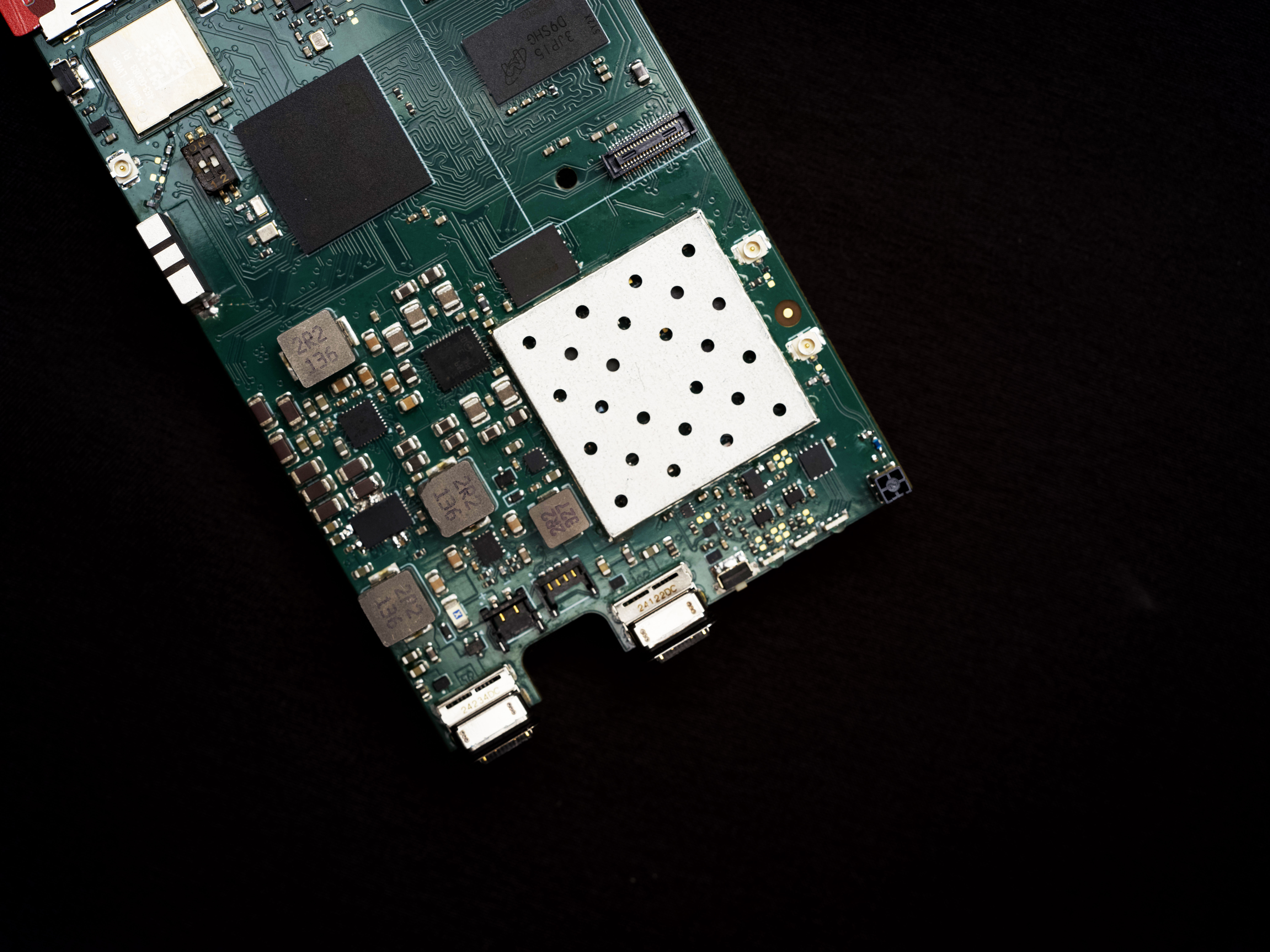
A turning point for mesh radios
The past year has seen a sharp rise in public interest around mesh radios and off grid communication devices. High profile discussions, including those on widely viewed podcasts, have introduced many people to the idea of decentralised, self forming radio networks. It is a rare moment where a technical concept that usually stays within engineering and defence circles has crossed into general awareness.
This shift is valuable for both the off grid messaging community and professional users. It highlights a growing demand for resilient communication tools that do not depend on mobile networks or central infrastructure. At the same time, the rise in public discussion has also created some confusion about what a mesh radio actually is and what it is capable of. This transition point offers an opportunity to clarify the differences between long range narrowband mesh devices and the professional systems used in real world operations including emerging tactical mesh radios increasingly used in modern military SDR and internet of military things deployments.
What a Mesh Radio Actually Is
A mesh radio is a device that participates in a network where every node can relay messages for others. Instead of relying on a single tower or central point, the network distributes traffic across multiple paths. If one link fails or a node moves, the network adjusts automatically. In military and defence communications this is often referred to as a military mesh network or IP mesh radio, enabling voice, data and sensor exchange without fixed infrastructure.
The result is a communication system that can continue functioning even when infrastructure is unavailable or unreliable. Mesh networking is especially useful for field teams, search and rescue operations, robotics, UAVs and anyone operating outside the reach of established networks.
In practice, this includes scenarios such as:
• urban rescue teams maintaining communication around concrete structures that block line of sight
• UAV telemetry that must stay stable in cluttered RF environments
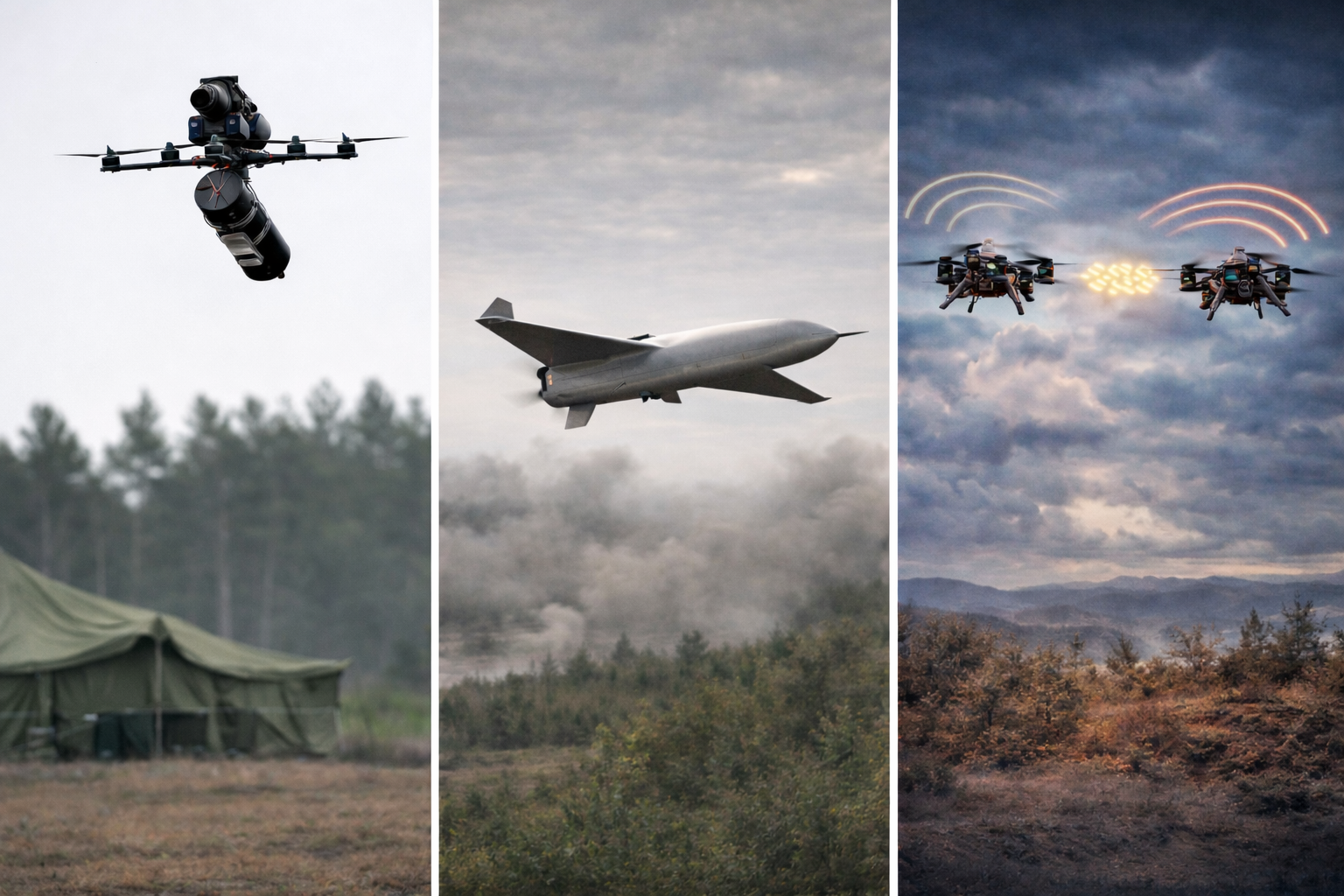
• drone fleets requiring both command links and live sensor or video data
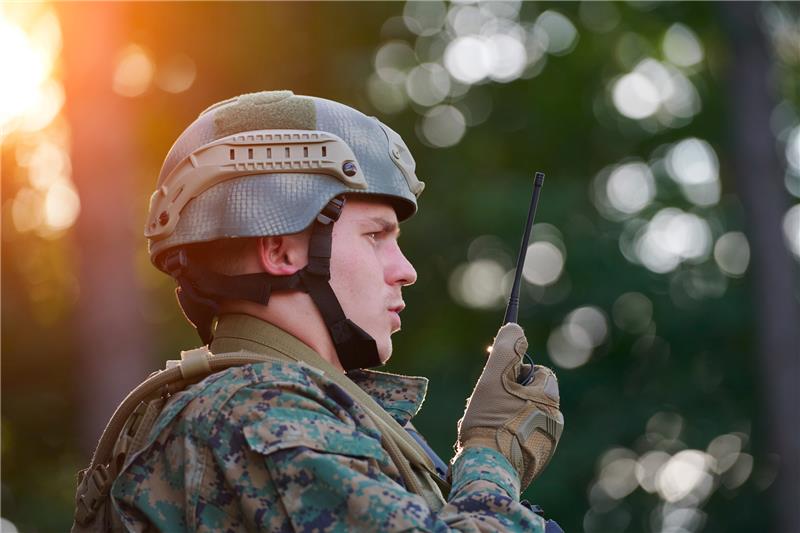
• dismounted teams sharing position, text and sensor information at the same time
• tactical operators requiring software defined radio military applications for coordinated manoeuvre
As interest grows, it is important to understand that mesh networking is not one single technology. There are many classes of mesh radios, each built for different purposes, frequencies and environments. The recent public exposure has driven many people to search for simple explanations, and this is where clear guidance is needed.
The Rise of Mesh Devices
Long range narrowband radios based on LoRa-class modulation have grown quickly in popularity. They are affordable, easy to set up and ideal for experimentation. They allow people to explore long range links, basic relay networks and off grid messaging, which has led to vibrant communities of enthusiasts building their own decentralised communication systems. These devices are low cost, low power and highly accessible. They also serve as an introduction to mesh networking for many people who previously had no exposure to radio communications.
However, a narrowband architecture inherently limits throughput and shared network capacity. Typical LoRa configurations operate in 7.8 kHz to 500 kHz of bandwidth and deliver net data rates in the low kilobit per second range, depending on environmental conditions and spreading factor settings.
While these radios can reach very high sensitivity (as low as −148 dBm) for extended range, the trade-off is limited capacity and long airtime per message. When several users or multi-sensor applications share the same narrow channel, collisions, interference and duty-cycle constraints rapidly impact reliability.
Scalability studies show higher packet loss and congestion as node count or message frequency increases. Even modest situational awareness traffic, such as multiple GPS and text updates per minute across a small team, can push the channel close to saturation, especially in cluttered RF environments.
For personal messaging, field experimentation and low-rate telemetry, these systems are excellent. Yet, they are not designed for real time coordination, low latency, or multi-stream operations that require simultaneous command, control, sensor data and mapping overlays.
This growing public adoption is positive for the industry as a whole, but it can lead to misaligned expectations when users apply narrowband radios to mission-critical scenarios where performance demands exceed what the underlying technology can deliver.
From Experimental Platforms to Operational Requirements: Where the gap appears
The difference between low power long range messaging devices and a professional system becomes clear when communication is needed under pressure.
Professional users require higher power levels, greater throughput and more robust modulation schemes. Tactical teams need equipment that maintains links even when interference is present or when multiple nodes are moving rapidly. UAV operators expect stable telemetry and command links that tolerate long distances, changing elevation and urban clutter.
Operational environments often involve:
• complex RF noise
• deliberate jamming
• heavy multipath conditions
• simultaneous voice, data and sensor traffic
• integration with other platforms such as drones or vehicles
A device designed for experimentation cannot meet these demands. The growing public awareness is helpful, but it is equally important to make the distinction clear so that expectations align with real performance needs, especially in military IoT environments where security and reliability are mission-critical.
What Defines a Professional Mesh SDR Platform
A professional mesh radio is usually built around a software defined radio architecture. This allows it to operate across multiple frequency bands and adapt its waveform to changing conditions. The distinction becomes clear when comparing the underlying radio capabilities.
Long range narrowband mesh devices typically operate in tens to hundreds of kilohertz of bandwidth and deliver net data rates in the low kilobit per second range. This is excellent for occasional messaging over long distances, but the limited throughput quickly becomes a bottleneck when multiple nodes share the channel or when telemetry, mapping data and other situational awareness traffic must be carried together.
Professional wideband mesh SDR platforms operate in multi-megahertz channel widths using OFDM or similar waveforms with adaptive modulation such as QPSK through 64QAM. Combined with MIMO and spatial diversity techniques, these systems provide multi-megabit throughput and maintain stable links for fast moving nodes in congested and multipath environments. Even under low signal-to-noise conditions, they deliver enough capacity for real time telemetry, voice, and live situational awareness overlays.
Key characteristics include:
• multi band operation combining long range sub-GHz and higher throughput 2.4 GHz links
• channel bandwidths in the MHz range enabling multi-megabit data rates
• frequency agility and hopping techniques to avoid interference and reduce detectability
• support for fast moving nodes such as UAVs through MIMO and diversity waveforms
• mesh networking stacks designed to handle real traffic loads including video, maps and telemetry
• secure boot, signed firmware and hardware-rooted AES-256 encryption for operational security
• ruggedised hardware and thermal performance for field deployments and EMI-constrained environments
In more classified or government-restricted environments, mission systems may incorporate technologies such as inline network encryption or high assurance internet protocol encryptors to protect sensitive data at scale, sitting alongside professional mesh SDR platforms as part of a wider secure communications architecture.
These systems are built so that a single mesh network can simultaneously carry the traffic required for coordination in the field: command and control, sensor data, blue force tracking, real time mapping and other streams essential for safety and mission success.
Why This Public Interest Matters for Industry and Defence
The sudden growth in public interest is beneficial for the broader communications, defence and military internet of things industries. It introduces new users to the concept of decentralised radio networks and increases the overall level of understanding.
It also encourages small defence contractors, drone integrators and robotics developers to explore mesh technologies sooner than they otherwise would have. Many start by testing narrowband mesh capable radios before realising their limitations and seeking more capable alternatives.
This bridge between consumer enthusiasm and professional requirements is where meaningful industry growth occurs. Better informed customers make better decisions, and a wider knowledge base ultimately strengthens adoption across sectors such as emergency response, unmanned systems and security.
How Beechat’s Kaonic Platform Fits Into This New Landscape
The Kaonic platform was designed from the ground up as a professional, dual-use mesh SDR for both civilian and defence deployments. Operating across CE-compliant 868 MHz and FCC Part 15-compliant 902–928 MHz sub-GHz bands, as well as 2.4 GHz ISM, it enables long-range penetration and high-bandwidth situational awareness links within a single compact system, making it highly suitable for tactical SDR deployments and secure IP mesh radio architectures.
With two transceivers per band, Kaonic supports concurrent operation across sub-GHz and 2.4 GHz, delivering multi-megabit aggregate throughput under licensed or authorised configurations. This allows command, control and sensor data to flow together on one secure, decentralised mesh.
Kaonic is engineered for straightforward integration into UAVs, ground vehicles and dismounted kits, with modular expansion via M.2 FPGA and AI plug-ins for advanced robotic and autonomy applications. End-to-end encryption using modern public-key cryptography ensures secure geospatial messaging and decentralised networking without reliance on infrastructure.
As organisations move beyond low throughput radios, Kaonic demonstrates what a next generation tactical mesh radio delivers: robust, secure connectivity designed for real operational use cases across drones, robotics and field teams.
Where Mesh Communications Are Headed
Decentralised communications will continue to expand as mobility, autonomy and field operations evolve. Mesh networks are well suited for unmanned platforms, distributed sensors and teams that operate in unpredictable environments.
Future systems will likely place more emphasis on:
• adaptive waveforms
• multi band operation
• secure interoperability
• compact hardware
• integration with aerial and ground robotics
The increased visibility of mesh communications will accelerate development in these areas and draw more talent, research and investment into the field.
The Bridge Moment
The recent surge in attention around mesh radios marks a meaningful moment for the industry. Long range narrowband mesh devices have introduced thousands of new users to the idea of off grid, decentralised communication. As their understanding grows, many will look for more capable systems that meet real operational demands.
This creates a natural bridge between consumer curiosity and professional adoption. The role of companies in the sector is to provide clarity, guidance and equipment that meets the expectations of users who are moving beyond experimentation into practical use.
Mesh radios are now part of the public conversation. The next step is helping people understand what makes a system ready for real world operations and how professional platforms differ from the devices that first sparked their interest. Beechat works with organisations across defence, robotics and UAV systems to deploy secure, resilient mesh communications in the field. Teams evaluating operational requirements are welcome to reach out for demonstrations, technical integration discussions or case studies based on real deployments.
Readers who want to explore the subject further can find additional articles on mesh radios, professional mesh networking and off grid communication systems across our blog.
Sources
https://cdn-shop.adafruit.com/product-files/3179/sx1276_77_78_79.pdf?
https://en.wikipedia.org/wiki/LoRa?
https://pmc.ncbi.nlm.nih.gov/articles/PMC7435450/?
https://www.mdpi.com/1424-8220/23/5/2403